
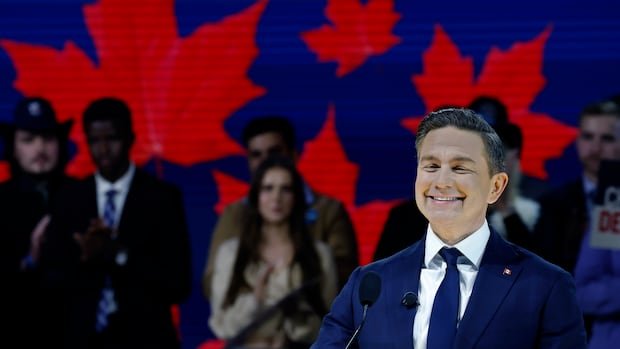
Conservative Leader Pierre Poilievre secured a significant majority of the vote during his leadership review on Friday night, demonstrating strong support from party members. Around 87% of delegates present at the party’s convention in Calgary voted to retain Poilievre as leader, a higher percentage than former Prime Minister Stephen Harper achieved in a similar review in 2005. This decisive outcome underscores the party’s confidence in Poilievre’s leadership.
Poilievre’s new campaign manager, Steve Outhouse, expressed satisfaction with the result, stating that it exceeded some Conservatives’ expectations and signals a clear direction for the party. The outcome provides a substantial mandate from the membership, allowing the party to focus on preparing for future elections.
Despite facing challenges, including a defeat in the previous general election and criticism from within his party, Poilievre’s leadership was reaffirmed by members. The absence of a strong contender for the leadership position and a unified parliamentary caucus further bolstered Poilievre’s position to challenge Prime Minister Mark Carney in the next federal election.
Acknowledging the potential for unforeseen developments in politics, Outhouse emphasized the readiness of Poilievre and his team to collaborate with all Conservative Party members in pursuit of victory in the upcoming election. Poilievre plans to engage with voters across the country, particularly targeting young demographics, through town hall meetings and outreach efforts.
During his speech to delegates, Poilievre emphasized the sacrifices of leadership, highlighting the importance of restoring the Canadian promise for future generations. He underscored the resilience and unity of Canadians throughout history, drawing parallels between past challenges and his commitment to lead the party forward.
Despite past criticism and challenges, Poilievre’s focus on domestic issues such as affordability and crime resonates with voters. By prioritizing these concerns over foreign policy matters, Poilievre aims to strengthen his appeal to Canadians and position himself as a viable alternative to Carney. Former deputy leader Lisa Raitt noted the strategic advantage of emphasizing everyday issues that impact Canadians, suggesting a potential shift in voter sentiment towards Poilievre’s leadership.
Overall, Poilievre’s resounding victory in the leadership review underscores party unity and sets the stage for a competitive political landscape leading up to the next federal election.