
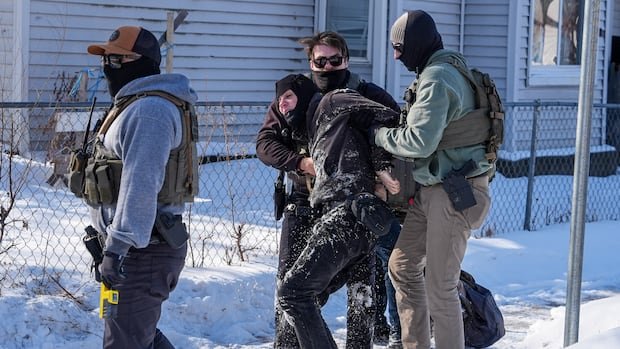
The Trump administration is scaling back the presence of immigration enforcement officers in Minnesota following the fatal shootings of two local residents by federal officers last month, according to border czar Tom Homan. Around 700 federal agents will be removed from immigration operations in Minnesota, as stated by Homan in a recent news briefing. The decision comes in response to criticism from local authorities and residents regarding the aggressive tactics employed by federal agents, which resulted in the deaths of two U.S. citizens.
A 37-year-old mother of three, Renee Good, was shot and killed on January 7 by an ICE officer, while critical-care nurse Alex Pretti, also 37, was fatally shot on January 24 by two Border Patrol officers. Additionally, another resident was shot in the leg by a federal officer during this period. Currently, approximately 3,000 federal officers are part of Operation Metro Surge in the state, which commenced in early December. Homan mentioned that the departing officers would consist of a mix from Immigration and Customs Enforcement (ICE) and Customs and Border Patrol (CBP), without specifying exact numbers.
The surge in federal presence is justified by the government as essential to apprehend criminal immigrants and counteract obstacles posed by state and local sanctuary laws and policies. Homan emphasized the removal of dangerous individuals from the streets, underscoring the arrests of unauthorized individuals charged with serious offenses.
Minnesota Governor Tim Walz has advocated for a quicker reduction in federal presence, stating that Operation Metro Surge does not enhance safety in Minnesota. He called for state-led investigations into the deaths of Alex Pretti and Renee Good, urging an end to retaliatory actions by federal authorities.
Following the fatal shootings, Democrats have been vocal in demanding reforms to restrain the Trump administration’s immigration enforcement activities. Discussions in Congress are ongoing to consider new regulations for ICE and CBP officers, prompted by the recent tragic events in Minneapolis and Chicago.
Homan expressed that a complete reduction to pre-surge officer levels hinges on ceasing activities targeting ICE officers and road blockades. Nearly 160 cases involving individuals charged with impeding federal officers are currently under scrutiny. Despite Homan’s involvement and the removal of controversial commander Greg Bovino, tensions persist in Minnesota.
In a separate development, Minnesota officials raised concerns after federal authorities impeded state investigators from accessing evidence in the Good shooting and asserted that Minnesota lacked jurisdiction for an investigation. The Justice Department is now conducting a civil rights investigation into the shooting of Alex Pretti, while the absence of a similar probe in the case of Renee Good remains unexplained.
The Trump administration’s scrutiny has extended to Minnesota Governor Tim Walz and Minneapolis Mayor Jacob Frey for purportedly obstructing federal immigration enforcement. Discussions between the administration and state officials are ongoing, with signs of dissatisfaction emerging within the Justice Department.
Recent departures from the U.S. Attorney’s office in Minnesota, including supervisory agents in the FBI, indicate internal discord over the handling of the Good shooting. This wave of exits follows earlier resignations amid disagreements within the Justice Department.
The situation continues to evolve as discussions and investigations progress between federal authorities and state officials in Minnesota.