
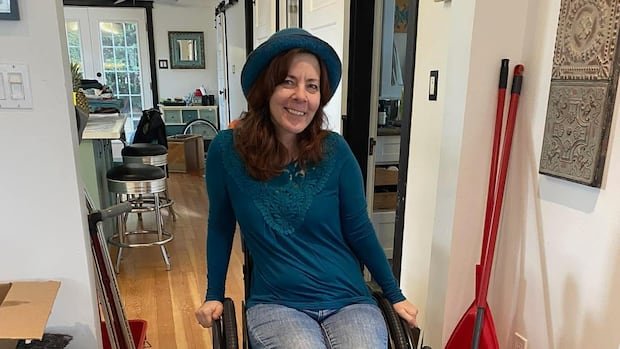
A woman from British Columbia dealing with a neurological condition is eagerly anticipating the return of her mobility device from a Toronto ride-hailing driver. The driver failed to return the $8,000 SmartDrive device that powers her wheelchair after she inadvertently left it in his car in October. Despite efforts from the woman, her son, Lyft, and Toronto police to retrieve the device, their attempts were unsuccessful.
Due to the absence of the motorized assistive device, which is an electronic wheel attached to her chair, the woman has encountered difficulties maneuvering on hills and uneven surfaces, leading to her being confined to her home for several months. Expressing relief at the device’s impending return, she also voiced fatigue from the protracted three-month ordeal.
The woman, who has been in a wheelchair for approximately nine years due to a neurological disorder and seizures, obtained the SmartDrive about seven years ago. However, as she now relies on disability support, she cannot afford to replace the wheel valued at $8,000.
Following intervention by CBC Toronto, the Lyft driver eventually agreed to return the SmartDrive and dispatched it via FedEx to the woman’s son in Toronto. During an interview, the driver failed to provide a satisfactory explanation for withholding the device since October when the woman accidentally left it in his car trunk.
The incident occurred on October 7 when the woman traveled from Chemainus, B.C., to Toronto to visit her son over the Thanksgiving weekend. It was only upon reaching Victoria Airport that she realized her SmartDrive was missing. Subsequent inquiries revealed that she had left it in the Lyft driver’s vehicle trunk.
Despite Lyft facilitating communication between the driver and the woman’s son, the driver demanded payment to return the device, which was agreed upon by both parties. Lyft also supplied a prepaid FedEx label to cover the return shipping costs.
Regrettably, the driver ceased communication with Lyft and the woman’s family after these arrangements were made. Lyft took action by deactivating the driver, condemning his behavior as unacceptable, and offering support to the affected parties. The company expressed readiness to collaborate with law enforcement if necessary.
In a bid to recover the device, the woman’s son engaged the Toronto Police Service in December. While the police acknowledged receiving a report on the missing device, emails exchanged in mid-December between an investigator and the driver suggest challenges in securing the device’s return.
Upon the device’s safe return, the woman’s son expressed satisfaction but emphasized the need for policy changes empowering companies to enforce cooperation from drivers when riders misplace essential belongings, particularly critical medical equipment.