
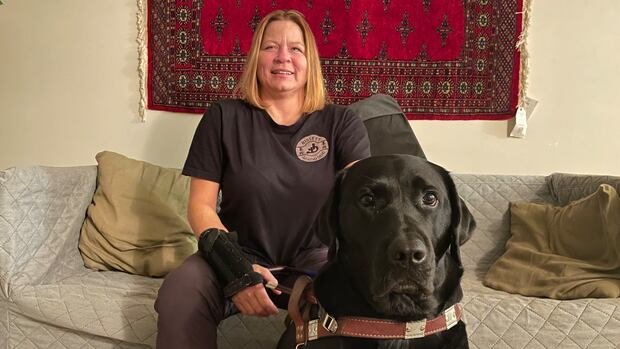
A resident of Winnipeg recounts being stranded in the cold after two separate Uber drivers declined to provide her transportation due to her reliance on a service dog. Veronika Kanya, who is visually impaired, relies on her guide dog, Apache, for assistance in her daily activities. When she requested an Uber to attend her self-defense class last Sunday, the initial driver refused to allow Apache in the vehicle, despite Kanya explaining that he is a service dog permitted to accompany her everywhere. The driver departed, and a subsequent driver dispatched by the Uber app also declined the ride upon seeing Apache. Eventually, a third driver accepted the fare and transported Kanya and Apache.
Uber asserts that it is against their policies for drivers to refuse service to individuals with service animals. Navideh Forghani, Uber’s communications manager, expressed disappointment in Kanya’s experience and emphasized their community guidelines prohibit drivers from denying service based on a passenger’s service animal. Uber is investigating the incident and may take action, including suspending the driver’s access to the app.
Kanya highlighted that the drivers who rejected her seemed unconcerned when she mentioned filing a complaint. While she has the option to declare she will be accompanied by a service dog when requesting a ride, she opts not to do so to avoid potential delays caused by drivers refusing the trip.
Guide dogs, like Kanya’s five-year-old Labrador retriever Apache, play a crucial role in enabling visually impaired individuals to navigate their surroundings independently. Kanya expressed how Apache has significantly improved her life by enhancing her sense of empowerment. The refusal of the Uber rides not only caused her to be late for her class but also left her feeling helpless and embarrassed.
Advocates for guide dog users stress that incidents like Kanya’s are unfortunately common. Larissa Proctor, an advocate with CNIB, noted that denials of service to guide dog users occur frequently due to a lack of awareness and education regarding the crucial role these animals play in assisting their owners.
Despite human rights legislation in Manitoba and across Canada prohibiting discrimination against service animal users, instances of denial still occur. Proctor mentioned that many individuals do not file complaints due to the lengthy process involved in addressing such discrimination.
Kanya, who had been using Uber without issues until this incident, expressed hesitance about using the service again. She underscored the importance of companies like Uber ensuring that incidents of discrimination against service animal users are promptly addressed and prevented in the future. Kanya intends to file a human rights complaint to raise awareness about ongoing discrimination and hopes for swift action to rectify such issues.