
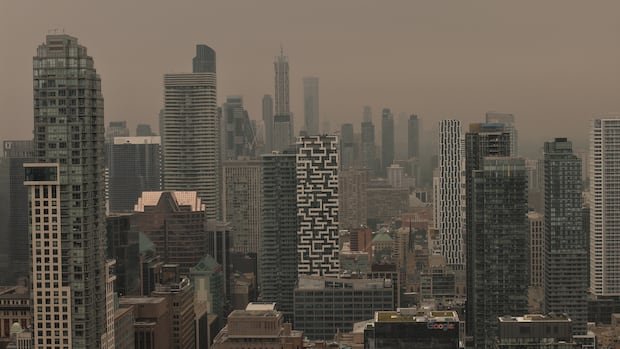
An orange haze enveloping Toronto’s skyline has triggered an ongoing air quality warning at the orange level, raising concerns among advocates who are pushing for enhanced safeguards to protect the city’s most vulnerable residents. As officials advise individuals to remain indoors and shut their windows to shield themselves from the wildfire smoke, advocates highlight the challenges faced by those without air conditioning, people experiencing homelessness, and outdoor workers.
Laura Tamblyn Watts, the CEO of CanAge, a seniors’ advocacy group, emphasized the heightened health risks faced by older individuals. She likened aging lungs to vintage cars that are less efficient in filtering pollutants, especially when coupled with chronic conditions like COPD, heart disease, or diabetes.
According to Tamblyn Watts, smoke events typically lead to a 40% surge in hospitalizations among Canadians aged 65 and above, underscoring the need for proactive policy adaptations. She stressed the necessity of installing air filtration systems in homes and monitoring the well-being of older adults during such incidents.
In response to calls for policy reforms to safeguard seniors, the Ministry of Health in Ontario referred inquiries to Public Health Ontario, which highlighted the vulnerability of certain populations to wildfire smoke but clarified its role does not involve setting or enforcing public health policies.
For those residing on Toronto’s streets, finding respite is a daunting task. Steve Teekens, the executive director of Na-Me-Res, expressed concerns about the city’s limited resources, noting the challenges in accommodating individuals experiencing homelessness due to the high demand for affordable housing.
Despite shelter staff’s recommendations to remain indoors and outreach efforts to provide water, Na-Me-Res shelters are operating at full capacity, necessitating the redirection of individuals to municipal cooling spaces or libraries. The city has activated emergency surge capacity across its shelter system and established several “cleaner air spaces” to provide relief.
Physicians have cautioned that engaging in heavy labor during such conditions exacerbates health risks. Dr. Samantha Green, a family physician and president of the Canadian Association of Physicians for the Environment, emphasized the importance of wearing N95 masks and rescheduling strenuous activities when feasible for individuals working outdoors. However, Green stressed that individual precautions are insufficient and called for enhanced worker protections at a policy level to address the impacts of climate-driven events like wildfire smoke and extreme heat.
Ontario’s Ministry of Labour reiterated that employers are obligated under the Occupational Health and Safety Act to take necessary precautions to safeguard employees from environmental hazards such as heat stress and poor air quality. Workers have the right to refuse unsafe work, with increased fines for safety violations being part of the province’s enforcement measures.