
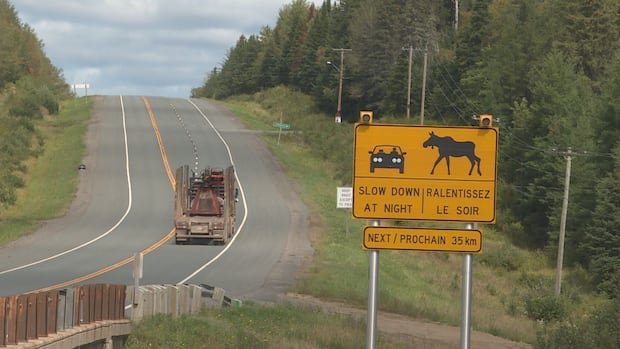
On a dark Saturday evening in late August, following an exhibition match against the Miramichi Timberwolves, the Chaleur Lightning hockey team embarked on their journey back to Bathurst aboard their team bus. Assistant coach Alex Ouellet recalled a moment when the driver suddenly gasped, signaling an impending collision. Within minutes of their departure, the bus struck a moose on the highway. Fortunately, all team members and coaches emerged unscathed, except for the driver who sustained minor scratches.
The encounter left a lasting impression on Ouellet and the team, resembling the experiences of many New Brunswickers who have faced similar situations involving large animals. The incident prompted Ouellet to express heightened vigilance while traveling those roads, especially during evening and nighttime hours.
Coincidentally, that same week, the province announced the addition of two new wildlife crossings along that particular highway stretch. These wildlife crossings, including wildlife fencing and tunnels, are part of the province’s efforts to prevent large animals like moose from wandering onto roadways.
Transportation Minister Chuck Chiasson explained that the placement of these mitigation measures is determined based on collision data provided by law enforcement agencies. Despite the existence of wildlife fencing along 331 kilometers of New Brunswick highways, the province acknowledges the necessity of maintaining animal movement and foraging habits.
New Brunswick currently boasts 82 wildlife crossings, including concrete tunnels installed in various regions. These tunnels, with dimensions exceeding four meters in height and width, serve as safe passages for wildlife, facilitating their movement across highways. Research conducted on similar tunnels in the past has shown positive results, with various animals utilizing them effectively.
Wildlife ecologist Graham Forbes emphasized the importance of creating intuitive tunnels for animals to encourage their usage. Apart from large mammals like moose, these tunnels have also witnessed the passage of smaller creatures such as beavers, ducks, bats, skunks, and raccoons.
Despite these efforts, the Department of Transportation has not observed a significant reduction in collisions due to the tunnels. Nonetheless, the department remains committed to enhancing road safety through various mitigation strategies, including the maintenance of clear guidelines and brush clearing.
Looking ahead, Ouellet expressed optimism for additional fencing in the area but acknowledged the limitations in completely preventing such incidents. He emphasized the importance of implementing preventive measures to mitigate the risks associated with wildlife collisions on highways.