
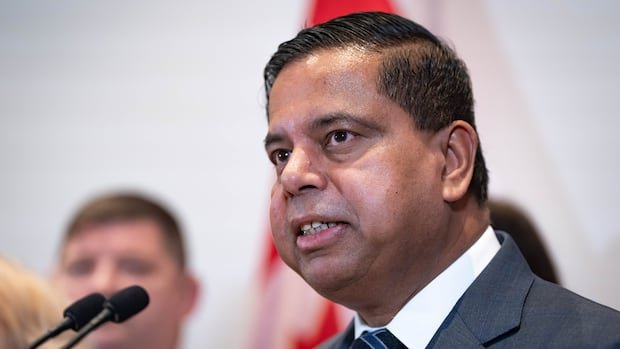
Public Safety Minister Gary Anandasangaree informed a parliamentary committee that individuals violating the new regulations on foreign interference in Canada may face increased penalties. Anandasangaree mentioned plans to amend the rules to raise the minimum penalty above the initially proposed $50 fine, but the exact threshold is yet to be determined.
Anandasangaree indicated that fines could range from $50 as the minimum to $1,000,000 as the maximum. He highlighted that the new foreign influence transparency commissioner would have discretion in setting fines based on factors like intent and past violations. Anandasangaree stated that the government is considering multiple changes to the regulations based on feedback from the public and opposition members to safeguard Canada and its elections from external interference.
The specifics of other potential changes were not disclosed by Anandasangaree, who aims to secure cabinet approval in a few weeks before publishing the modifications in the Canada Gazette. The implementation of cabinet-approved orders typically involves a delay of several days.
Following a parliamentary decision a year and a half ago to establish mechanisms to counter foreign interference, Anandasangaree has proposed appointing Anton Boegman as Canada’s inaugural foreign interference transparency commissioner. The goal is to have the commissioner’s office and the foreign agent registry operational by early spring, although Anandasangaree refrained from providing an exact timeline.
Anandasangaree emphasized that the new regime would apply universally to all nations, including the United States, without restrictions based on country of origin. However, he declined to address whether recent interactions between U.S. State Department officials and advocates of Alberta’s separatist movement constitute foreign interference.
During the committee session, opposition members, like Conservative Michael Cooper, pressed Anandasangaree on the delay in appointing a commissioner, formulating regulations, and establishing the registry since the legislation’s adoption. Cooper criticized the $50 minimum fine as insufficient and called for expediting the initiative after a two-year delay.