
Consumers continue to express unease regarding high prices and economic instability stemming from the U.S. trade tensions, despite some positive economic indicators, as per a recent Bank of Canada survey. The survey participants anticipate a higher risk of missing debt payments and job loss, with concerns over elevated inflation mainly attributed to tariffs.
These worries have dampened their willingness to spend, with respondents citing high prices, economic uncertainty, and increased housing expenses as deterrents. Compared to the previous quarter, more respondents believe their financial situation has worsened.
On a positive note, participants are more optimistic about job prospects this quarter and foresee a decline in long-term inflation expectations. However, overall consumer expectations have decreased in the fourth quarter, remaining below pre-pandemic levels and lower than before the trade conflict with the U.S. commenced.
According to Claire Fan, a senior economist at RBC, the disparity between perceived sentiment data and actual economic data has been widening throughout the past year. While the Canadian economy has shown resilience compared to dire predictions, concerns persist about the labor market, especially among workers in trade-dependent sectors.
A significant portion of survey respondents believe that Canada has navigated the worst impacts of the trade tensions with the U.S., with some already thinking the worst is over. However, uncertainties remain regarding the future of trade relations, including the status of IEEPA tariffs and the Canada-U.S.-Mexico trade agreement (CUSMA).
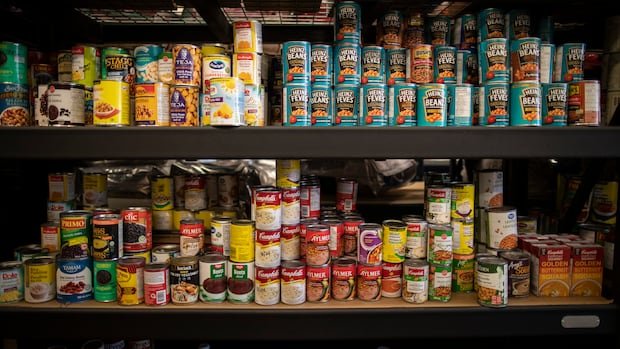
Brad Berg, a shopper in Calgary, highlighted the challenges of rising living costs, particularly food and shelter expenses. Despite stabilized headline inflation, grocery prices surged by 3.5% in 2025, as per a recent StatsCan report, impacting consumer behavior and economic morale.
Food economist Mike von Massow noted that consumers react strongly to price hikes, especially in regular expenses like groceries, while slower price decreases may go unnoticed. This situation, combined with flat or declining incomes, particularly affects lower-income households.
Overall, the prevailing negative consumer sentiment reflects the lingering impact of economic challenges, emphasizing the need for sustained recovery efforts and support for vulnerable households.