
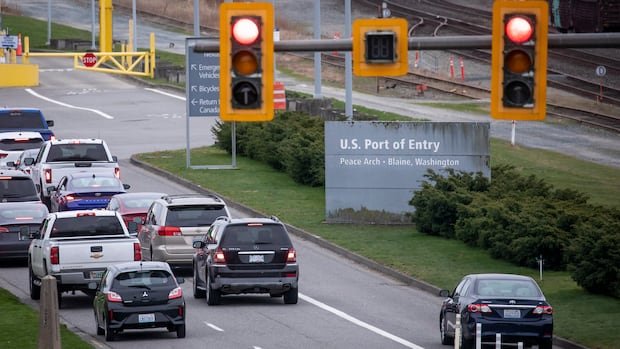
A persistent pattern of British Columbians choosing to stay on their side of the Washington state border in 2025 is causing concern among border towns reliant on Canadian visitors. Data from the Whatcom Council of Governments, situated along the northwest Washington state border, reveals a 35% decrease in southbound border crossings for B.C. vehicles in 2025 compared to the previous year. The decline in Canadian traffic started early in 2025 and continued throughout the year.
The impact of fewer British Columbians traveling south has been notably felt in towns like Blaine, Wash., where businesses, including parcel services and gas stations, are experiencing closures and decreased foot traffic. Various factors are contributing to this trend, such as the unfavorable exchange rate with the U.S. dollar and the absence of a consumer carbon tax in Canada, making gas prices relatively cheaper in the north.
Blaine Mayor Mary Lou Steward attributes the decline in Canadian visits to a breakdown in trust between Canadians and Americans, citing issues like the tariff war and annexation threats from former U.S. President Donald Trump. Steward believes that rebuilding this trust may take several generations and emphasizes the need for border towns to diversify their economies. Despite the challenges, she and other residents continue to encourage Canadians to visit, highlighting the shared values and dependencies between the communities.
Immigration lawyer Len Saunders, based in Blaine, describes the situation as an “absolute collapse” in cross-border travel from Canadians. He points to the negative rhetoric from the U.S. federal government and incidents involving federal immigration agents as further deterrents for Canadian travelers. While Saunders acknowledges the lack of significant issues at border crossings, he expresses frustration over the ongoing decline in Canadian visits and the hardening attitudes towards cross-border travel.
Laurie Trautman, director of the Border Policy Research Institute at Western Washington University, notes the concerning trend of declining B.C.-Washington state border crossings, suggesting that it may become a “new normal.” She underscores the importance of maintaining strong regional relations despite the decrease in physical border crossings due to factors like recent flooding and upcoming events like the World Cup.
Overall, the challenges faced by border towns highlight the need for ongoing collaboration and efforts to strengthen cross-border relationships, even in the absence of high levels of Canadian travel across the border.