
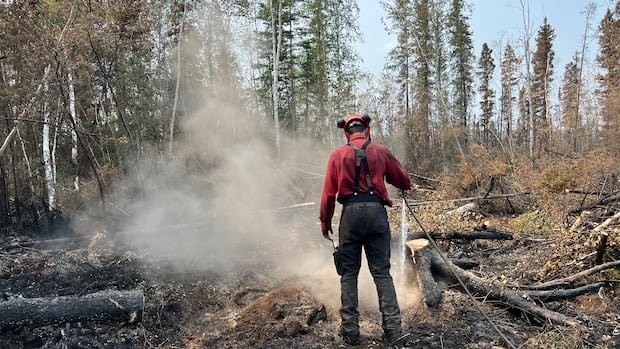
A former Yellowknife fire chief advocates for the establishment of a national mental health organization dedicated to supporting firefighters and frontline personnel across Canada. Nelson Johnson, the former fire chief, emphasizes the need for such an organization to facilitate quicker access to mental health services without the complexity of navigating different service providers across provinces and territories.
Johnson highlights the challenges faced by fire crews, including wildland and infrastructure firefighters, who frequently encounter job-related traumatic events leading to immediate or long-term health issues. Each individual may have unique triggers, with responding to fires in or near their own communities being particularly difficult for local crews.
A review of the 2023 wildfire season in the N.W.T. revealed significant mental and physical health challenges due to high demands on firefighters. The report highlighted deficiencies in mental health training and resources at the time. Subsequently, efforts have been made by organizations and government agencies to enhance support by collaborating with specialized mental health service providers.
In 2025, the Northwest Territories Fire Chiefs Association partnered with Wounded Warriors Canada to bolster mental health services. Additionally, the territorial government signed an agreement with Homewood Health to provide crisis management and counseling support immediately following incidents.
Despite increasing efforts to normalize mental health conversations, progress in the territory is perceived as slow by Johnson. He stresses the need for proactive peer support and a shift away from placing the burden on individual firefighters to seek help, as the process can be lengthy once initiated.
Keith Hartery, a wildfire safety officer with the N.W.T.’s Department of Environment and Climate Change, acknowledges the progress made in addressing mental health concerns within the fire service. He emphasizes the importance of normalizing mental health conversations through training and promoting wellness activities to combat stress, fatigue, and anxiety experienced by firefighters.
Following a tragic plane crash that claimed the lives of three firefighter air support team members, immediate mental health support was provided in affected areas. Hartery underscores the significance of including Indigenous-led and culturally safe resources in addition to mainstream counseling for crew members.
Hartery expresses support for a national mental health agency, citing the benefits of centralized resources for firefighters, particularly given the dispersed nature of service providers across the country. He envisions a national body as a valuable resource hub for accessing various mental health services efficiently.