
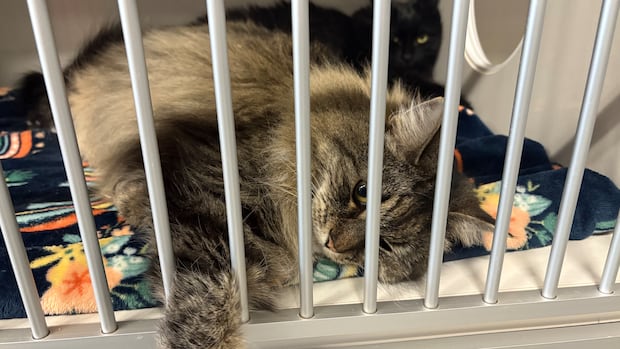
Cassie Martin never anticipated that the expenses associated with pet ownership would rise so dramatically when she adopted her cat Henry almost 14 years ago.
She also did not foresee that she would find herself unable to afford Henry’s treatment for an aural hematoma, a distressing condition that causes swelling in the ear, leading her to make the heartbreaking choice to euthanize him in November.
In the early fall, Martin spent nearly $400 on Henry’s initial treatment, only to receive another estimate of $400 shortly after when his condition did not improve.
“We attempted to manage it ourselves,” Martin explained. “Eventually, he was unable to walk.”

Cassie Martin’s cat, Henry, suffered from an aural hematoma. Martin could not afford ongoing treatment for the condition. (Submitted by Cassie Martin)
Upon returning to the veterinarian, Martin was presented with two alternatives. The first involved a $300 examination, followed by additional costs for any necessary tests. The second option was euthanasia for $400.
“I firmly believe that had we been able to treat him, he would have enjoyed a few more happy years,” she remarked. “He had no prior health issues leading up to this.”
She estimated that throughout Henry’s life, the expenses for cat food, litter, and veterinary care have “quadrupled.”
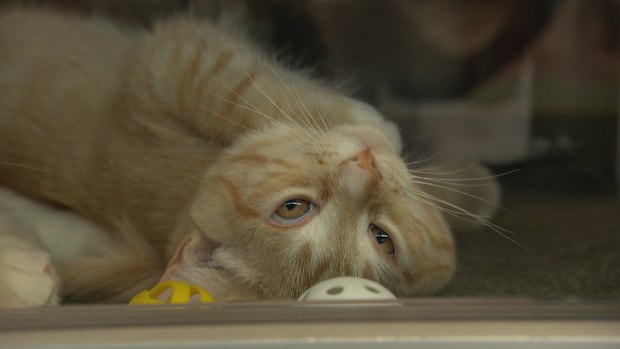
As living costs and veterinary expenses rise, advocates for animal welfare report that more individuals are finding it challenging to care for their pets.
Pam Sheppard is also facing challenges due to rising expenses, particularly after the passing of her husband in December 2024. She mentioned that she relies on a fixed income and cannot work full-time because of health issues.
“I quickly realized that managing four dogs on my own was not feasible,” she noted.
Shortly after her husband’s death, she made the painful decision to find new homes for two of her dogs, an experience she described as heart-wrenching.

Pam Sheppard with her dog Lucie on her lap and her other dog Sam. (Submitted by Pam Sheppard)
One of her remaining dogs, Lucie, suffers from facial paralysis, which Sheppard stated has caused her to become severely dehydrated and underweight due to difficulties in eating and drinking.
Sheppard mentioned that while Lucie could receive a feeding tube or undergo additional facial surgery, she feels “tapped out” after incurring over $30,000 in veterinary bills over the past eight years.
“It’s devastating,” she expressed.
Such situations are not surprising to local shelters and animal welfare organizations like the NBSPCA, which report that financial pressures are leading to an increase in animal intakes throughout the province.
Rising costs lead to more complaints and surrenders
Lesley Rogers, the executive director of the NBSPCA, stated that inquiries to their hotline for investigations rose by four percent last year.
“This is due to more individuals finding themselves in challenging situations regarding their pets,” Rogers explained. “The cost of living is climbing, veterinary care is expensive, and there are societal trends related to the economic downturn.”
“People may no longer have access to the same employment opportunities they once did, and many are struggling to find affordable pet-friendly rental housing due to the tight housing market.”
Heather Smith, executive director of People for Animal Wellbeing (PAW) in Moncton, indicated that housing-related challenges are a primary reason for the increase in pet surrenders.
PAW took in close to 2,000 animals last year, a 15 percent increase from the year prior. Smith noted that approximately half of these animals were surrendered by their owners.
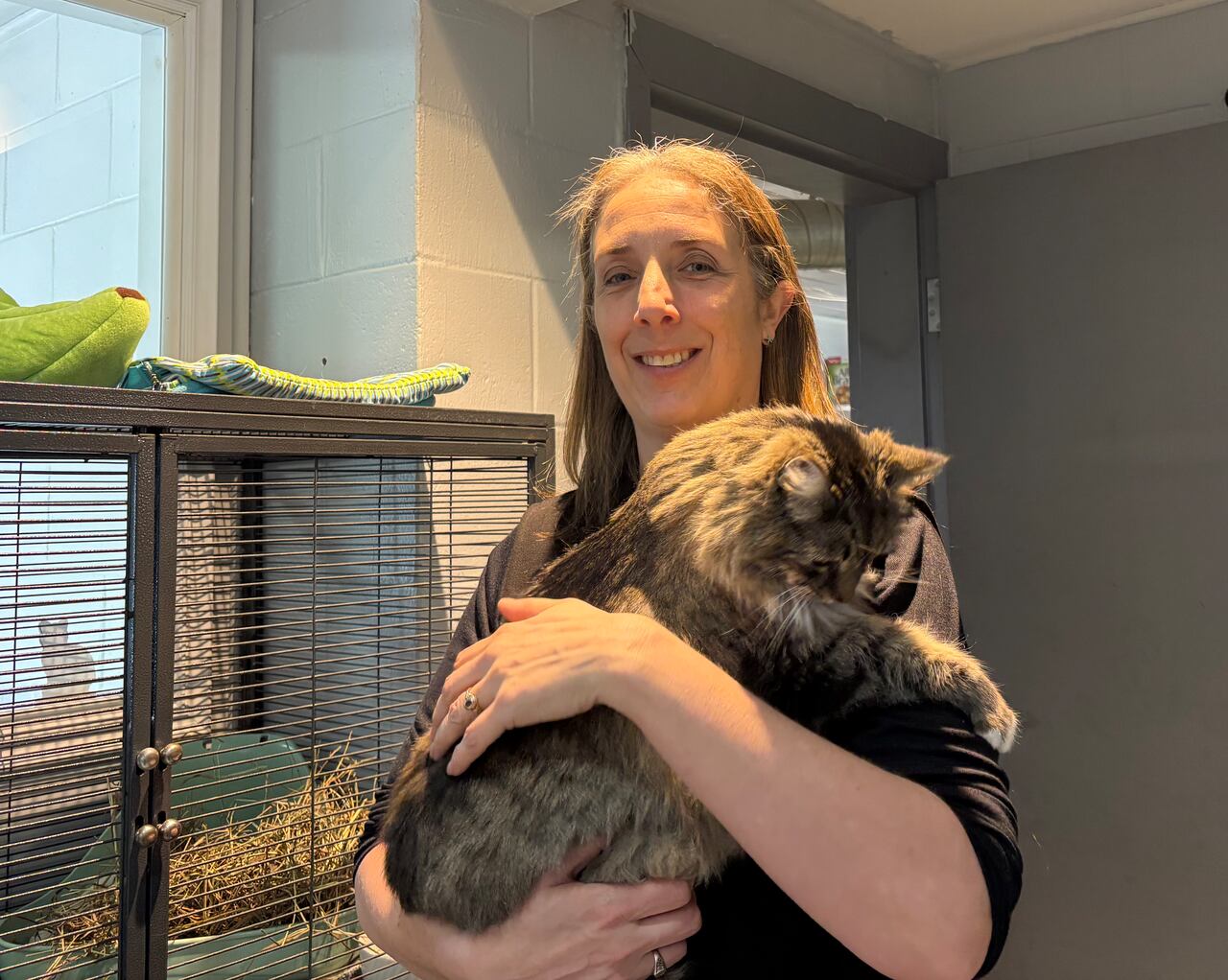
Heather Smith, executive director of People for Animal Wellbeing, reported a 15 percent rise in intakes last year, along with an increased demand for their pet food bank. (Hope Edmond/CBC)
“It could be that they are unable to find a pet-friendly rental or that they cannot afford their current housing, necessitating a move,” she explained.
“These animals are not just pets; they are family members.”
Smith also noted that more families are utilizing the shelter’s pet food bank.
The food pantry, stocked with various cat and dog food, was accessed over 600 times last year, a significant increase from approximately 200 times in 2021.
“If we can help them temporarily with pet food, we can keep that pet with their family and free up kennel space for the most urgent cases,” Smith stated.
The demand for services that assist with pet-related expenses is continuing to rise, according to Rogers, including the NBSPCA’s Happy Tails program, which provides veterinary care for low-income families.
Despite inflation affecting prices across the board, a report by CBC’s Marketplace from last year revealed that veterinary care costs are surging nationwide due to corporate acquisitions of veterinary clinics and subsequent price hikes.
Veterinarians addressing increased costs, says N.B. vet
Dr. Mary-Ellen Themens, a full-time veterinarian in Dalhousie and registrar of the New Brunswick Veterinary Medical Association, noted that inflation has contributed to rising veterinary fees.
“Employee salaries have gone up, overhead costs have increased, and pharmaceuticals are more expensive,” Themens stated. “The expenses associated with clinic inspections, which we are required to perform, have also risen.”
While Themens cannot provide a specific percentage for the increase in veterinary costs in recent years, she mentioned that it varies among clinics.
According to Themens, veterinarians are trying to manage their expenses, and new graduates in the field are demanding higher salaries due to a shortage of new entrants despite the ongoing demand. They are also attempting to manage substantial student debt, she explained.
For pet owners struggling with veterinary costs, Themens advises having upfront discussions with their veterinarians.
“Explore if there’s an alternative to the ideal treatment plan that still provides good care but may not be as effective, yet still offers comfort and addresses the issue,” she suggested.
“Veterinarians enter this profession because of their passion for medicine and a desire to help. This approach aims to balance the financial aspects with the needs of the patient before them.”