
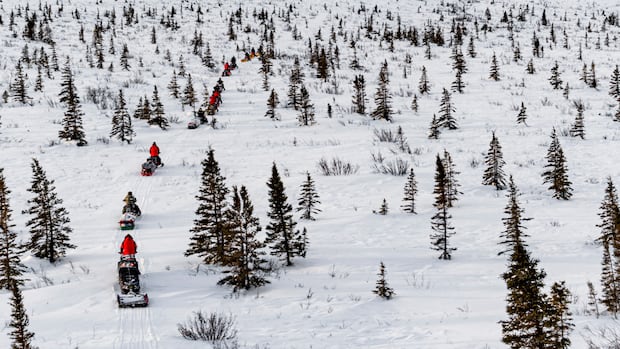
A surge in activity regarding Arctic security is evident, spanning a 4,500-kilometre trek from the Arctic to a conference venue in Whitehorse.
Delegates from various circumpolar nations have gathered in Whitehorse for the Arctic Summit, which is set to emphasize infrastructure development. In contrast, the Canadian Rangers and members of the Canadian Forces will largely bypass infrastructure discussions to undertake an adventurous journey from Herschel Island to Churchill, Manitoba.
This uptick in activity coincides with a growing international interest in the Arctic region, as the Canadian government contemplates significant investments in infrastructure in the North. The summit’s agenda is heavily centered on infrastructure that could serve both military and civilian purposes, alongside the abundant critical minerals found throughout the Canadian North.
Retired General Wayne Eyre, who previously held the position of Chief of Defense Staff and is a panelist at this year’s summit, remarked that changing geopolitical dynamics render previous notions about Arctic security obsolete.
“This region is becoming increasingly crucial on a global scale,” Eyre stated. “As we analyze the interconnected global security landscape, our world feels much smaller, and the Arctic is no longer as secure as it used to be.”
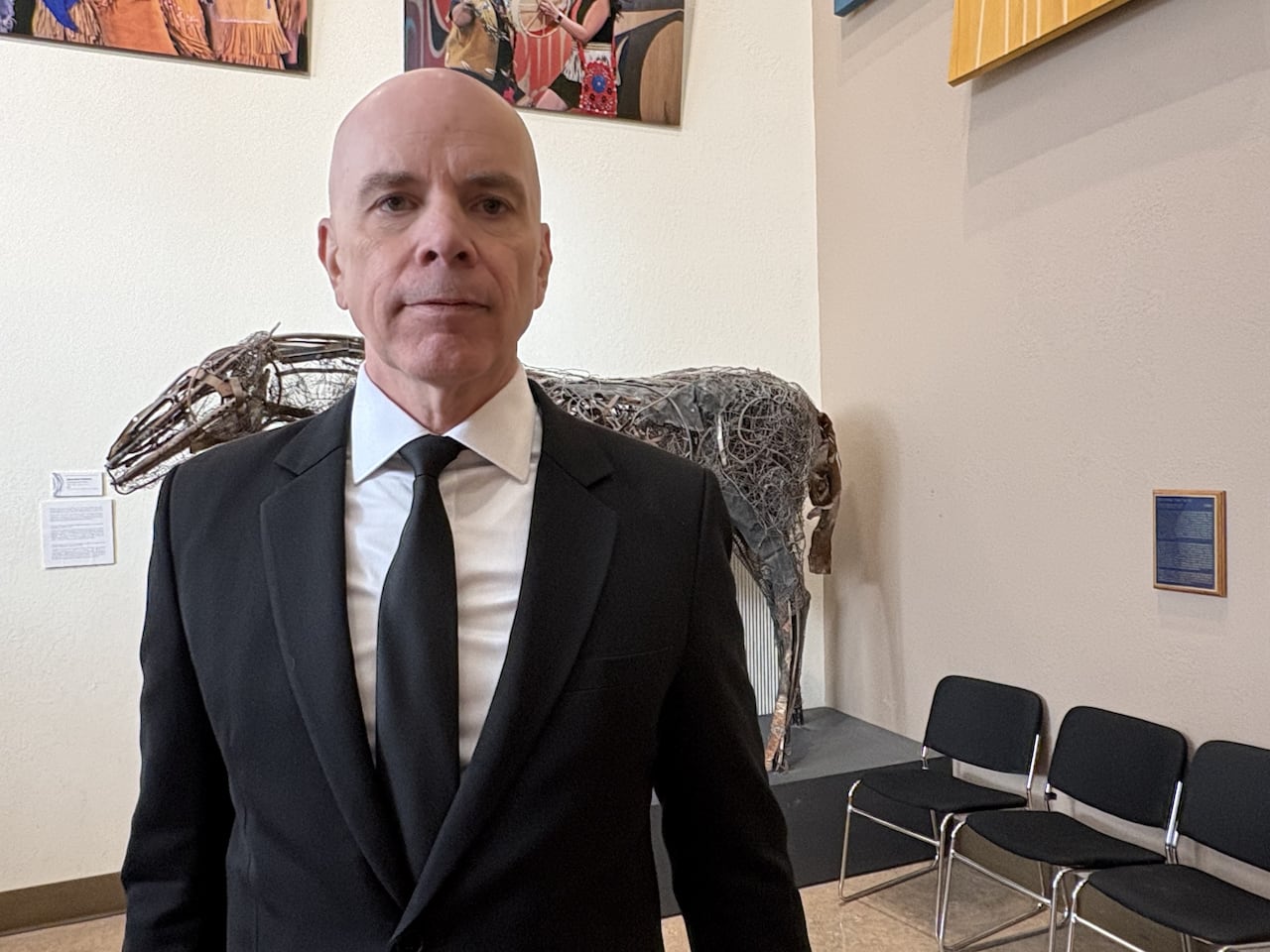
Retired General Wayne Eyre of the Canadian Armed Forces speaks to a reporter at the Arctic Summit in Whitehorse, Yukon, Feb. 23, 2026. (TJ Dhir/CBC)
“Smaller” in the Arctic is a relative term. As the summit progresses, one of the largest iterations of Operation Nanook-Nunalivut is commencing throughout the territories.
Over 900 kilometres north of Whitehorse, members of the 1st Canadian Ranger Patrol Group have been stranded for three days at Shingle Point, located on the Yukon’s north slope. They are making a journey exceeding 4,500 kilometres on snowmobiles to reach Churchill, Manitoba, with planned stops at various communities and North Warning System sites along the route.
The patrol experienced delays due to heavy snowfall and high winds, as Inuvialuit rangers deemed conditions unsafe for advancement, according to Whitney Lackenbauer, an academic and honorary colonel with the Canadian Rangers who is participating in the expedition.
“The past few days have underscored the importance of the Canadian Rangers being rooted in their communities,” he noted. “Having rangers from Inuvik and Aklavik, who have cabins at Shingle Point, meant they could guide us on when to take a break.”
Master Cpl. Tony Kunuk, a Canadian Ranger from Igloolik, Nunavut, mentioned that even rangers from different Arctic regions have lessons to learn about local weather conditions.
“I’m out of my element at this time,” he remarked. “In my home area, there are no trees. We are fortunate to have individuals from Inuvik and Aklavik sharing insights about the environment and how quickly it can change here.”
“Thanks to this third day of inclement weather, we’ve been able to sit down and discuss our histories while getting to know one another better. It’s turning out well so far,” Kunuk added.
-
Video
Greenland sovereignty takes centre stage at Arctic security conference
-
New study to gather industry input on Port of Churchill expansion
Operation Nanook-Nunalivut is scheduled to continue until April. This operation includes a variety of exercises at multiple locations throughout the Canadian Arctic and will engage approximately 1,300 Canadian personnel, alongside soldiers from the United States, France, Belgium, and Denmark. Parks Canada and the RCMP are also participating.
Additionally, the operation will feature the firing of two M777 howitzers, with these heavy artillery pieces being test-fired near Cambridge Bay, Nunavut. The Canadian Armed Forces have indicated that this will mark the first instance of these weapons being fired north of the 60th parallel. The firing was originally scheduled for last week but postponed due to adverse weather.
The Arctic Summit is set to conclude in Whitehorse on Wednesday.