
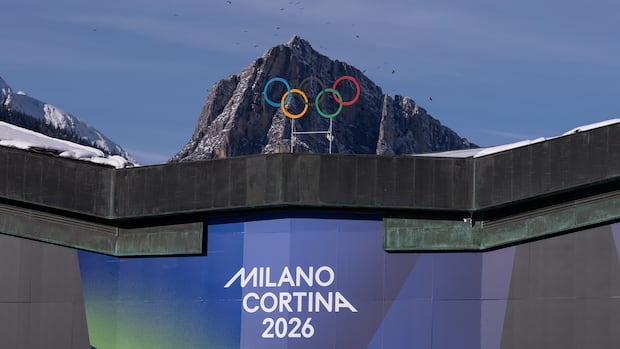
The 2026 Milan Cortina Winter Olympics will be the most geographically dispersed in Olympic history.
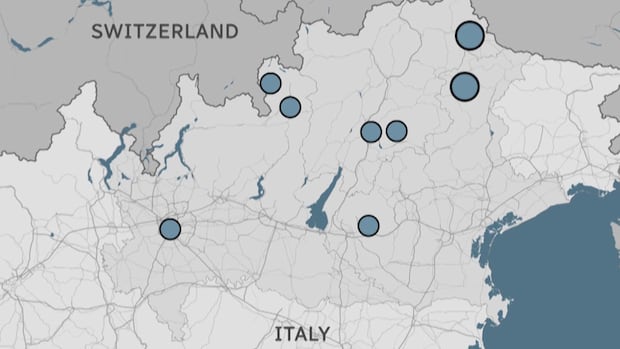
For the organizers of the Games, scheduled from February 6 to 22, the decision was made to utilize the existing infrastructure as much as they could. This approach results in the absence of a central hub, leading to strategic considerations for attendees. The Games will cover an area exceeding 22,000 square kilometers.
Here’s the practical implication of this layout.
Decisions and Planning
For attendees, it will be exceptionally challenging to witness various events such as ice sports in Milan, men’s Alpine skiing in Bormio, snowboarding in Livigno, cross-country skiing in Predazzo, biathlon in Anterselva, and women’s Alpine skiing in Cortina, all before making it to the closing ceremony in Verona.
The travel circuit exceeds 850 kilometers, which translates to nearly 13 continuous hours of driving.
While organizers aimed to utilize current infrastructure, there have still been challenges in finishing the sliding venue in Cortina and the Santagiulia ice hockey arena in Milan on schedule.
By spreading out the venues, the organizers have minimized the need for new constructions, allowing various regions in northern Italy to benefit from the tourism and investments that accompany such large-scale events.
However, this arrangement also results in the absence of a singular emotional focal point for the Games, forcing spectators to make challenging decisions about which events to attend, and making it difficult for athletes to support their teammates in distant disciplines.
A Challenging Schedule
Mona Patel, a lawyer from Los Angeles, and her partner planned their schedule months ahead to attend events like men’s downhill skiing and snowboarding in the Valtellina cluster near the Swiss border, as well as bobsled and luge in Cortina d’Ampezzo.
They aim to catch skating events in Milan while traveling to and from Italy. If successful, they will have experienced three of the four Olympic clusters.
To facilitate their plans, they reserved one accommodation in Valtellina and another in South Tyrol, positioning themselves close to their selected mountain events and enabling them to enjoy the slopes as well.
Patel mentioned that the intricate planning was made feasible through HomeExchange — she utilized points accumulated from listing her own property in California on the platform to secure stays in Italy.
“Our main goal is to attend Olympic events,” Patel stated. “If there’s a powder day, we’d love to hit the slopes. Sometimes, if an event takes place in the afternoon or evening, we can manage to do both. We’re not intimidated by the distances.”
A Family-Friendly Approach
This will be Lars Thorn’s sixth Olympic experience, but for his wife and two young children, it will be their first. Coming from Southern California, he opted out of outdoor events due to the cold and focused instead on ice sports in Milan. Distance was also a consideration — he expressed regret at missing Lindsey Vonn, who is still hoping to compete in Cortina despite a recent knee injury.
“Being outdoors with two little kids isn’t conducive to a family-friendly experience,” Thorn remarked.
He plans to take his five-year-old son to long track speed skating and men’s and women’s hockey, all accessible via public transport in Milan, while his wife and daughter explore the city’s attractions.
His next Olympic experience will be closer to home in Los Angeles, where he can walk to four venues and reach seven others with a quick ferry ride — a stark logistical contrast to Milan Cortina.
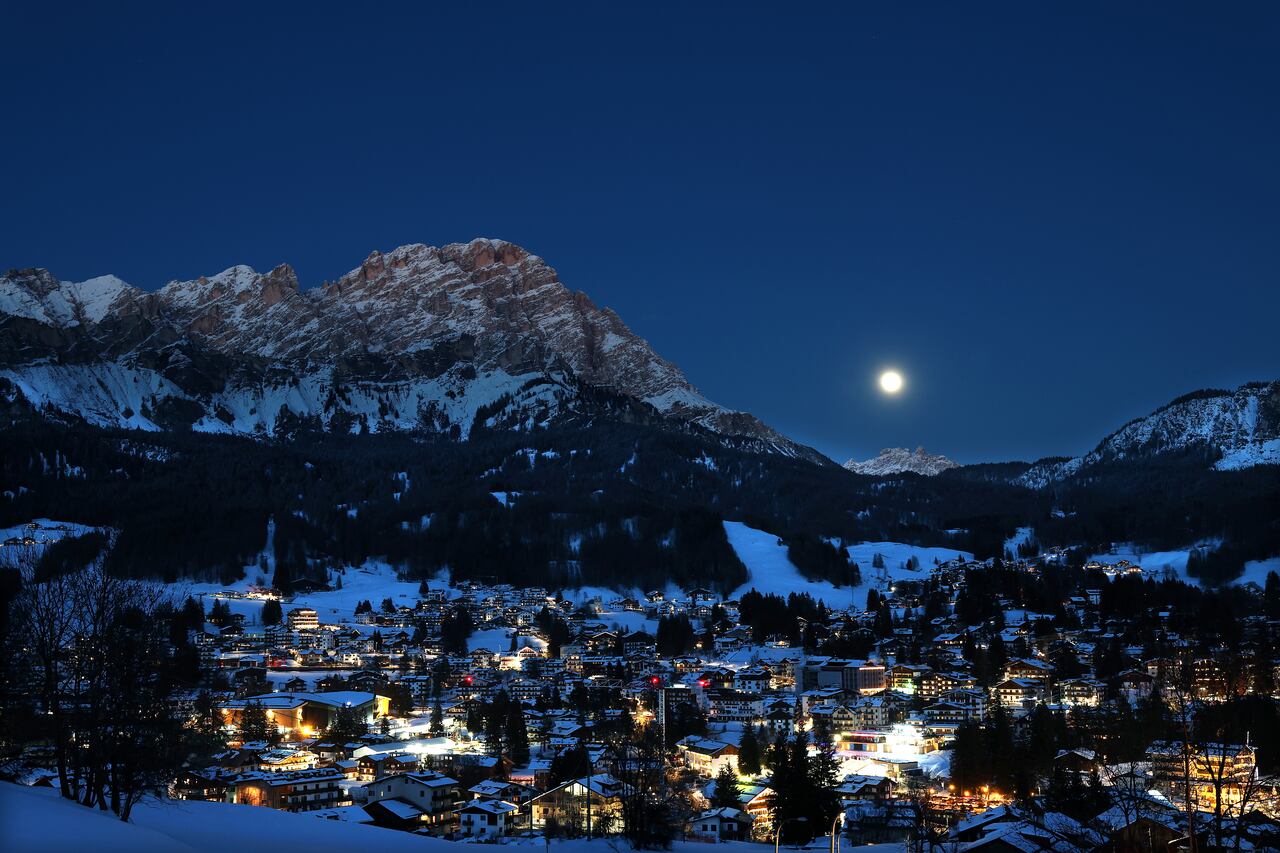
A Snow Moon rises above The Dolomites and the Cortina city centre ahead of the Milano Cortina 2026 Winter Olympics on Feb. 1 in Cortina d’Ampezzo, Italy. (Al Bello/Getty Images)
The First Olympics with Two Hub Cities
The opening ceremony on Friday will feature stars like Mariah Carey and Andrea Bocelli performing at Milan’s San Siro Stadium. To ensure all competitors from the dispersed venues can be part of the Parade of Athletes, segments of the ceremony will be broadcast from Livigno, Predazzo, and Cortina.
As the first Olympics with two hub cities and events grouped across four locations, organizers had to arrange accommodations not only in Milan and Cortina, but also in four other areas: Anterselva near the Austrian border, Bormio and Livigno close to the Swiss border, and the Val di Fiemme in the Trentino autonomous province.
Milan is the sole city to receive a legacy Olympic Village, which will transition into housing for 1,700 students post-Games. A temporary village has been established in Cortina, while existing hotels and facilities have been repurposed in other venues.
When Italy last hosted the Winter Games in Turin in 2006, spectators eagerly anticipated daily medal ceremonies in the city center, which became a central part of the Olympic experience. Due to the expansive distances in Milan Cortina, medal presentations will occur at the venues right after the events conclude.
“For those with tickets to an event, witnessing the crowning of the champion is a wonderful experience,” Thorn noted. However, he added that the Olympic Plaza in Salt Lake City, much like in Turin, fostered a unique atmosphere.
“That, I believe, is one of the highlights, as it allows the city to feel involved,” Thorn concluded.