
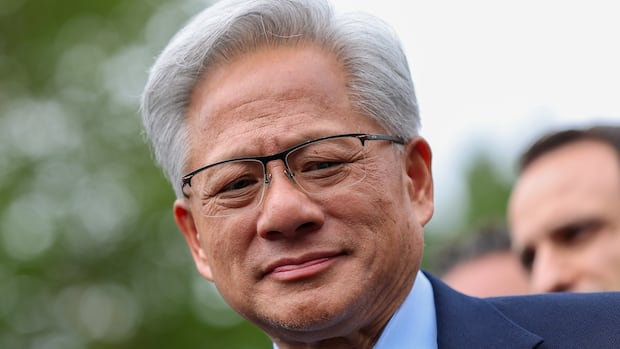
Jensen Huang, the former CEO of Nvidia, who stepped down from the semiconductor company last week amid a scandal, stated on Tuesday that he “would be honoured” to return as CEO if the board concluded that his reinstatement would benefit shareholders and employees.
“Since I left, I have received numerous requests from Nvidia’s employees, investors, business partners, and customers urging my return as CEO,” Huang remarked in his first public statement since resigning on November 12, following revelations of extramarital affairs that increased scrutiny on the chipmaker’s operations in China.
“I created challenges for the board that I sincerely regret. I fully accept my mistakes, and I am dedicated to collaborating with the board’s independent investigation,” he added.
Nvidia has yet to issue a response regarding Huang’s remarks.
His statements coincided with Nvidia’s announcement of a newly established board-level national security and export-control committee, a move prompted by Huang’s resignation. Moreover, Huang has agreed to participate in transcribed interviews with U.S. lawmakers next month.
These interviews are scheduled for December 1, before the House committees on foreign affairs and intelligence, as well as the select committee focused on the Chinese Communist Party, according to a statement.
Nvidia’s general counsel, Tim Teter, is set to appear before the same committees on December 2.
“We anticipate hearing from Jensen Huang and Tim Teter regarding their involvement in a possible breach of our national security,” stated the Republican chairmen of the committees, Brian Mast, John Moolenaar, and Rick Crawford.
“The American public deserves clarity on Mr. Huang and Nvidia’s role in permitting potentially harmful actors from the People’s Republic of China to access our most advanced chips, as well as the involvement of a possible Chinese intelligence asset in this matter.”
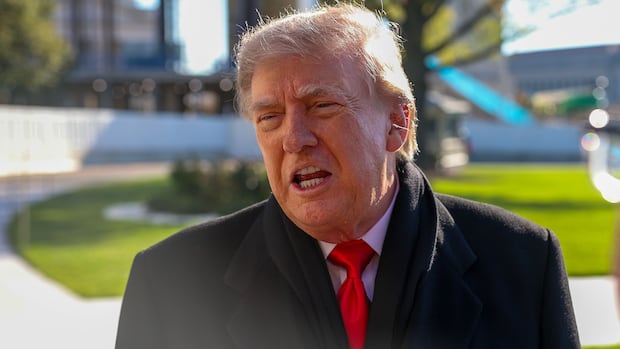
U.S. President Donald Trump says he ‘would not mind’ if Jensen Huang returned to his position as Nvidia CEO and voiced support for Commerce Secretary Howard Lutnick, who is under heightened scrutiny regarding his potential involvement in the alleged spy scandal.
Regarding the newly formed national security committee, Nvidia announced that it will be chaired by Suzanne Nora Johnson, a former vice-chair of Goldman Sachs and an experienced corporate director in the U.S. The committee will also include Stephen Neal, the former CEO of the law firm Cooley LLP, and John Dabiri, a professor of aeronautics and mechanical engineering at Caltech.
President Trump expressed approval of Nvidia’s initiative on Tuesday, labeling it a prudent decision for the company to establish a national security effort.
Huang’s personal relationships have intensified scrutiny regarding Nvidia’s governance and whether its oversight has kept pace with its rapid growth and increasing significance to U.S. national security.
The crisis resulted in a loss of over $400 billion in Nvidia’s market value by the end of trading on Monday.
The Trump administration announced on Monday that it would impose additional restrictions on China’s access to advanced AI chips from various companies, including Nvidia, as Trump prepared for discussions with President Xi Jinping in China.
For years, Washington has aimed to limit Beijing’s access to Nvidia’s most advanced processors, placing the company’s business in China at the heart of a growing debate surrounding national security, trade, and U.S. technological dominance.
Nevertheless, Chinese firms have consistently discovered methods to circumvent these restrictions. Huang has long supported an increase in chip exports to China.

The new committee will supervise Nvidia’s national security and global trade compliance initiatives while collaborating with independent legal, national security, and trade compliance experts.
Nvidia’s current national security and global trade compliance teams will report to this committee, while interim CEO Colette Kress will manage daily operations. The committee intends to convene at least quarterly, including meetings with management and in executive sessions.
According to its 2026 proxy statement, the company lacked a chief compliance officer.
It remains uncertain whether the formation of the committee was a direct response to the revelations about Huang’s personal life. Nvidia has not promptly addressed a request from Reuters for further information.
-
How China gets around the U.S. ban on Nvidia chips
-
The Nvidia scandal has wiped away $1T in value. What that means for your investments
“We are dedicated to constructively collaborating with government and industry partners to create and enhance a solid framework that utilizes all available tools to protect national security while fostering ongoing technological innovation,” stated Nvidia board chairman Harvey Jones.
Nvidia is expected to report its third-quarter earnings after the market closes on Tuesday.
Estimates suggest that the company has over $500 billion in commitments, encompassing supply and capacity backstops for chip acquisitions, data-center leases, and equity investments, although this amount represents only a small fraction of its market capitalization.