
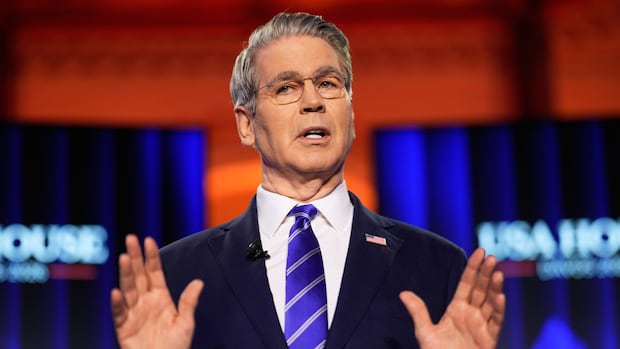
On Thursday, U.S. Treasury Secretary Scott Bessent spoke about the separatist movement in Alberta, becoming the most senior official in the Trump administration to comment on the province’s political situation.
In an appearance on the conservative network Real America’s Voice, Bessent asserted that Canada is preventing Alberta from constructing a pipeline to the Pacific.
“I believe we should allow them to come into the U.S., and Alberta is a natural ally for the U.S.,” he stated.
“They possess valuable resources. The people of Alberta are very independent,” Bessent remarked, adding that there are “rumors of a potential referendum on whether they wish to remain in Canada.”
When questioned about his knowledge of the situation, Bessent replied, “People are discussing it. They desire autonomy. They want what the U.S. has.”
U.S. President Donald Trump had previously canceled trade negotiations with Canada in October, feeling insulted by an advertisement from Ontario featuring former President Ronald Reagan that criticized tariffs. Members of the Trump administration claimed the ad represented Canadian interference in U.S. affairs.
A Trump administration official, speaking anonymously, informed The Canadian Press that Bessent was responding to a question during the interview. The official emphasized that it is not comparable to a Canadian province using taxpayer funds to produce what they deemed “political attack ads” in another country.
Federal and Premier Responses
In response to Bessent’s remarks and whether they constituted foreign interference, Artificial Intelligence Minister Evan Solomon stated that Prime Minister Mark Carney has emphasized Ottawa’s efforts to diversify trade and fulfill its role as a middle power to maintain “a robust economy that allows us to make decisions that preserve our country’s sovereignty.”
“That does not imply that we must respond to every comment. We can manage what is within our control,” he added in Quebec City, where Carney’s cabinet was meeting.
Culture Minister Marc Miller echoed this sentiment after being informed of Bessent’s statements later on Friday.
“You have to let that go, I believe,” he remarked. “It’s always coming. You just have to handle it.”
Alberta Premier Danielle Smith’s spokesperson, Sam Blackett, stated that the vast majority of Albertans are not interested in becoming a U.S. state.
The premier “endorses a strong and sovereign Alberta as part of a united Canada,” Blackett mentioned in an email.
“Alberta aims to establish new pipelines in all directions and will continue collaborating with our U.S. partners to expand pipeline capacity to U.S. markets,” he added.
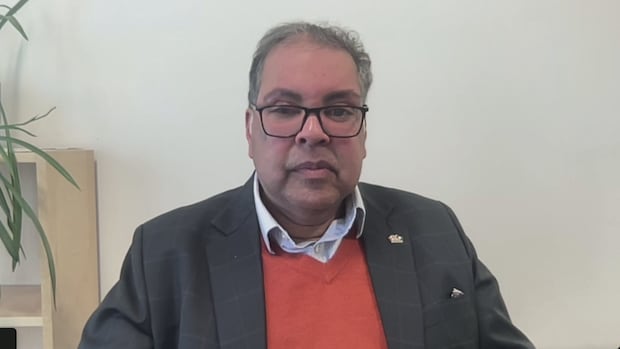
U.S. Treasury Secretary Scott Bessent expresses support for Alberta separatism. Alberta Opposition Leader Naheed Nenshi shared his response to these remarks.
Gathering Signatures for a Referendum
Some proponents of the Alberta independence movement have claimed they have engaged with members of the Trump administration, although no names have been revealed. Their message has begun to resonate among MAGA influencers online and with Republicans in general.
Republican Congressman Andy Ogles from Tennessee stated in a BBC panel earlier this week that the people of Alberta would “prefer not to be part of Canada and instead be part of the United States because we are achieving success daily.”
The Alberta independence movement is currently collecting signatures to initiate a referendum. The referendum will ask whether Alberta should be independent from Canada, rather than inquiring if it should join the United States.
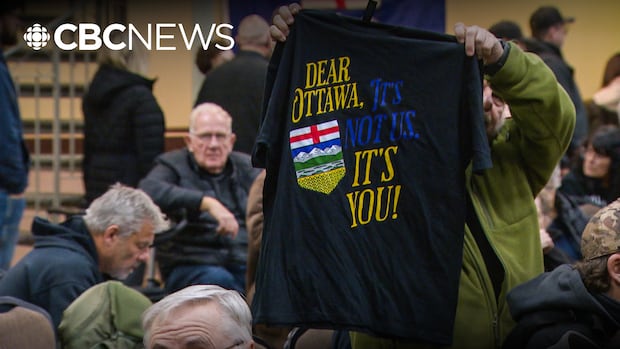
Supporters of Alberta’s independence gathered in central Alberta Wednesday night to sign a petition advocating for the province’s separation from Canada. CBC’s Lina Elsaadi spoke with attendees at one of the events.
Mitch Sylvestre, who is leading the petition for a referendum, stated on Friday that he believes no one in his movement is seeking to join the U.S.
“People desire sovereignty, which is what individuals in the U.S. possess, but we want sovereignty independent of the U.S.,” he explained.
Sylvestre suggested that Bessent was merely stating the obvious by referring to Alberta and the U.S. as “natural partners,” given their extensive trade relations.
Sylvestre asserted that U.S. officials should take note of the developments in Alberta, yet he would prefer if they refrained from commenting on his independence movement.
“Alberta will thrive on its own,” he remarked. “A free-trade agreement with the U.S. would likely benefit both parties. It would certainly benefit us.”