
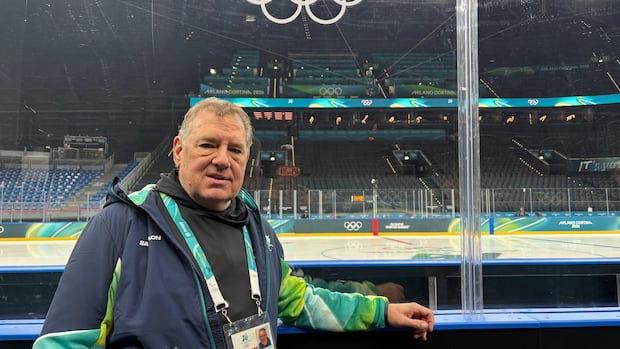
Chris Jones reports from Milan.
Nearly half a century after Americans experienced their Olympic ice miracle, the Italians—assisted by some Canadian expertise—might be on the brink of theirs.
Just a month ago, the Milano Santagiulia hockey venue was still in the midst of construction. Cranes obstructed the building’s exterior. An abandoned vehicle was stationed at the primary entrance. Workers left a trail of paper espresso cups, seemingly to help them navigate the labyrinth of temporary fencing.
A trial event held three weeks prior only heightened concerns. Don Moffatt, the 67-year-old Canadian ice master, stood on his rink, gazing at it like a farmer anxious about his delayed crops.
He hadn’t lost a dime on it—“There’s nothing in this ice but pure reverse-osmosis water,” he remarked on Tuesday—but the presence of drywall dust and dirt gave the ice a grayish hue, and a hole developed during the first period of the inaugural game, necessitating a patch that quickly became a viral sensation.
As recently as the previous week, Moffatt remained uncertain if he could create a playable surface.
“I thought, okay, we could end up being the laughingstock of the world if this doesn’t work out,” he reflected. “That’s how precarious the situation was.”
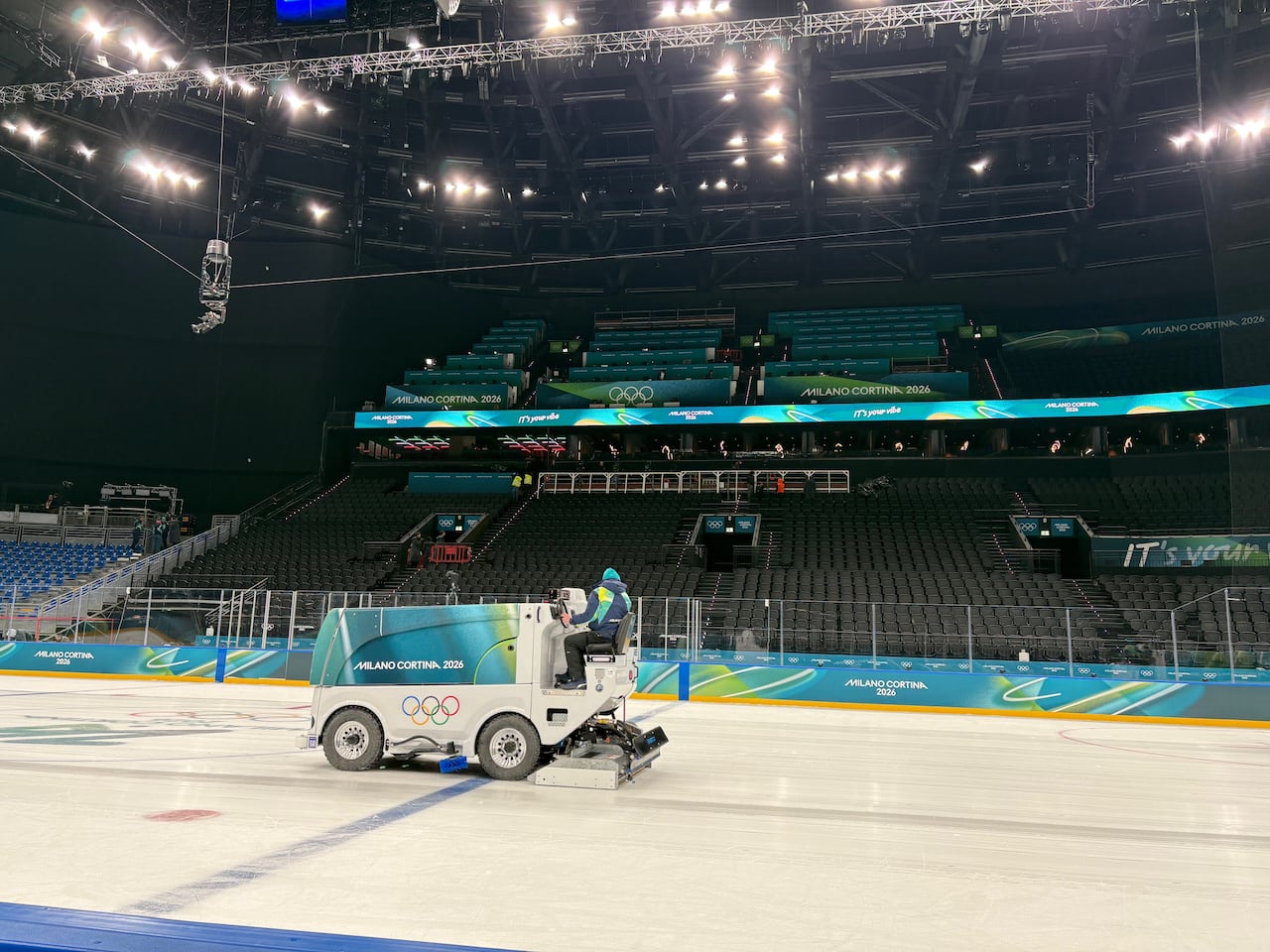
A Zamboni cleans the ice at the Milano Santagiulia hockey arena, which will host its first game when Czechia competes against Switzerland in women’s play on Friday, (Chris Jones/CBC)
Moffatt had started to worry that the dust and debris might emerge during the intense weeks of competition ahead, much like a splinter breaking through the skin. “Everything is trying to rise to the surface,” he noted. He opted to shave down the ice to the refrigerant pipes beneath and lay down a fresh sheet.
However, when he arrived last Monday with his full team to commence the rebuild, construction delays and an inch of muddy water in the Zamboni room halted him once more.
“I’ve never faced a challenge like this before,” Moffatt stated. “I pushed it to the last possible moment.”
He recalled how his father had constructed their backyard rink in Peterborough, Ontario, and began his own late-night efforts. After an exhausting 12-hour work session, he successfully laid his foundation. He managed just two hours of sleep before returning on Tuesday to paint the hockey markings and Olympic emblem at the center of his new rink, subsequently layering four more inches of ice with continuous flooding.
“That went remarkably well,” Moffatt expressed. “On Monday, I felt like it was a 50-50 chance. By Tuesday, it felt more like 80-20.”
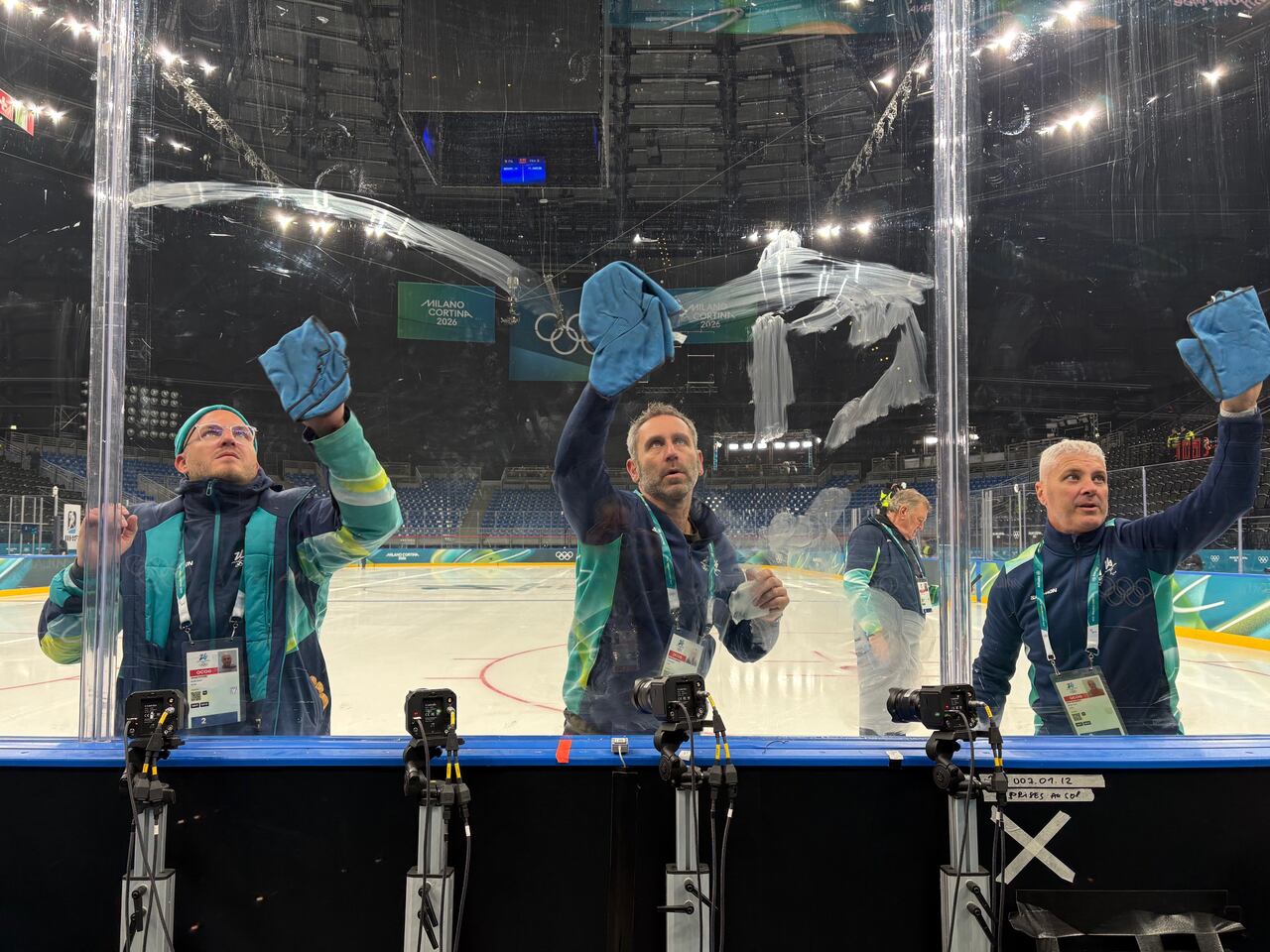
Workers continue to remove construction dust and debris from the arena in preparation for play. (Chris Jones)
Just a week later and three days before the games commence, Moffatt appeared calm. No longer did he gaze anxiously at his ice, fretting over uncontrollable factors. He resembled a person standing by a shore, contemplating a frozen lake.
“I’m completely confident,” Moffatt asserted. “This ice is ready for the NHL.”
The women’s competition will kick off here with Czechia going up against Switzerland later this week. Moffatt observed the French team practicing on his ice Tuesday morning and was heartened by their intensity.
“It’s similar to a muscle. You have to break it down before building it back stronger. There was a lot of snow, numerous skate marks, and the more I can address these issues, the stronger the ice will become,” he explained.
However, Moffatt cannot remedy the peculiar sound emanating from his ice.
Since the Milano Santagiulia serves as a concert hall that won’t host hockey again, the refrigerant pipes were installed on top of the concrete floor instead of beneath it, as is customary. This has resulted in the ice producing a hollow sound, amplifying the distinct clatter of hockey into a booming crescendo.

A concession stand in early January, above, and on Tuesday, below. (Chris Jones/CBC)

(Chris Jones/CBC)
“I’m going to try to inform as many teams as possible,” Moffatt remarked. “They’ve never skated on anything that sounds like this. It’s incredibly loud. When the big players make sharp turns, it sounds as if they are tearing the ice up.”
The sounds of hammers and drills continued to resonate through the arena. A small group of individuals in blue track suits wiped the marks off the glass behind him, paralleling the efforts of concession staff upstairs, buffing counters that were non-existent just weeks ago.
“The facility is absolutely stunning,” Moffatt said, gazing up at the arena lights.
A new, larger scoreboard had been installed, and an impressive array of sixty cameras was set up to capture every conceivable angle of the action.
Moffatt, who is attending his fifth Olympics, took a moment to absorb it all. “I’ve lost quite a bit of weight here,” he noted. “Surprisingly, I haven’t lost much hair.”
Now, the moment of triumph is about to commence.