
Welcome to our weekly newsletter focusing on environmental trends and solutions driving us towards a more sustainable future. Last month, Prime Minister Mark Carney’s new nature strategy highlighted the integration of artificial intelligence (AI) in conservation efforts. This article delves into how the conservation sector is leveraging AI, akin to other industries.
This week’s topics include how AI could revolutionize conservation work, the significant impact of wind energy, and Parks Canada’s partnership with social media influencers to influence visitor behavior in Banff National Park.
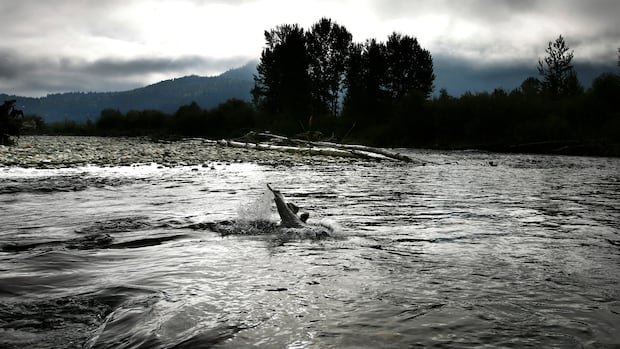
AI technology has revolutionized the conservation sector, enabling continuous monitoring of phenomena like salmon migration using cameras. Alemu Gonsamo, based at McMaster University, uses satellite and aerial imagery to study Canada’s landscapes, focusing on factors such as tree density and carbon levels in remote areas. The utilization of AI in processing vast amounts of collected data has proven invaluable in this endeavor.
Prime Minister Carney’s announcement of integrating AI into Canada’s new nature strategy has been welcomed by experts like Gonsamo, who stress the importance of technology in data collection and analysis due to Canada’s vast territories and limited human resources. Collaborating with organizations like the World Wildlife Fund Canada and Indigenous communities, Gonsamo’s team has utilized AI and machine learning to study carbon storage in Canadian soils, particularly in carbon-rich peatlands in Northern Ontario. Through innovative techniques, such as leveraging ground measurements and satellite data, Gonsamo’s team has made significant advancements in understanding and managing environmental resources.
By embracing AI and cutting-edge technologies, the conservation sector is poised to make substantial progress in safeguarding ecosystems and promoting sustainability.