
An Alberta-based company looking to mine silica sand in Manitoba has teamed up with the largest university in the province to develop an innovative groundwater monitoring network. This collaboration involves creating a cutting-edge system to track aquifer conditions in real-time, a technology that experts highlight as increasingly vital for global groundwater studies.
Carla Devlin, the president of Sio Silica, announced the partnership with the University of Manitoba for a feasibility study and the establishment of a scientifically robust, non-intrusive monitoring system. Devlin emphasized the broader utility of this initiative beyond their mining project, aiming to enhance responsible resource management practices across Manitoba.
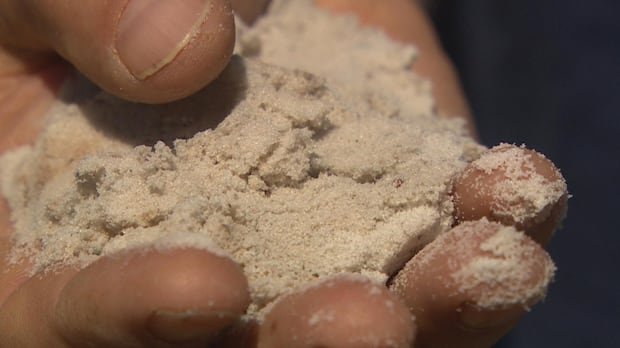
The venture with the university comes as Sio Silica renews its efforts to extract sand from the sandstone aquifer beneath the Rural Municipality of Springfield in southeastern Manitoba. Previously, in 2024, the NDP government had denied Sio Silica’s license application due to concerns about potential impacts on drinking water quality and subsurface stability issues.
Sio Silica’s original proposal entailed drilling 7,200 wells over 25 years to retrieve silica sand used in various industries like solar panel manufacturing, fracking, and construction. However, community opposition arose over environmental worries and the potential risk of groundwater contamination.
In response to these concerns, Sio Silica revised its plan by proposing fewer wells, a phased approach, and reduced sand extraction in a bid to secure an environmental license. Devlin clarified that the university partnership is distinct from their license application but underscores a commitment to transparency and scientific rigor in their project development.
The collaborative research effort was described by Devlin as a significant advancement, with Sio Silica’s technology team labeling it a “game changer.” The project aims to comprehensively study the southern Manitoba aquifer, generating a valuable groundwater database that would otherwise require substantial government investment.
Leading the research project, Ricardo Mantilla, an associate professor at the University of Manitoba, explained the use of quantum gravimetry to monitor changes in the gravitational field as groundwater moves. While this technology aids in measuring groundwater levels, it does not assess water quality.
Mantilla stressed the broader implications of the project for Manitoba, highlighting the intricate interactions between surface water and groundwater that influence the province’s water systems. The research aims to enhance understanding and sustainable management of water resources, emphasizing the importance of listening to the signals provided by groundwater.
Hydrogeologist Landon Halloran noted the global trend of using quantum gravimetry for groundwater monitoring, underscoring its potential to reduce the need for costly well installations. He emphasized the significance of safeguarding groundwater as a crucial component of the water cycle and a vital source of drinking water for communities.