
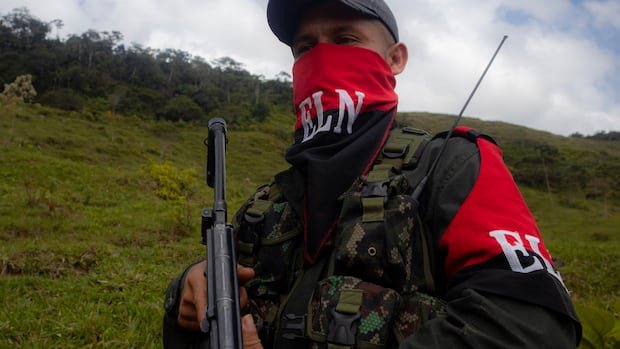
Following the U.S. attack on Venezuela, guerrilla groups in the borderlands with Colombia are adjusting their strategies amidst concerns of potential betrayal by Venezuelan officials and the looming threat of escalated conflict if U.S. forces become involved, as per local security analysts.
Since the Jan. 3 attacks, reports indicate increased movements of guerrilla factions on both sides of the border. Notably, the National Liberation Army (ELN), a prominent guerrilla group in the region, has been seen shutting down camps in Venezuela amid fears of their locations being exposed to U.S. authorities by Venezuelan regime insiders.
Jorge Mantilla, an expert on armed conflicts and national security from Bogotá, highlighted that the ELN is restructuring its security measures, reviewing social control systems in Venezuelan communities where their leaders are present. Additionally, the ELN has halted training activities and the formation of a specialized unit with Venezuelan military support.
Mantilla expressed uncertainty surrounding the situation, noting that the ELN had anticipated a U.S. intervention in Venezuela. In the past, the ELN had reportedly warned former Venezuelan President Nicolás Maduro about potential traitors within the Venezuelan military, according to intercepted communications by Colombian intelligence.
The recent developments following the attack could pave the way for the ELN to fulfill its aspiration of becoming a continental guerrilla force. If the U.S. establishes a military presence or if Venezuela undergoes political fragmentation, the ELN could capitalize on the situation to expand its influence across Latin America.
Ivan Mordisco, a leader of a splinter group from the disbanded Revolutionary Armed Forces of Colombia (FARC), has called for unity among guerrilla factions and the Venezuelan military to resist U.S. intervention. However, Gerson Arias, a researcher, cast doubts on Mordisco’s credibility and emphasized that groups like the ELN have little incentive to cooperate with him.
The ELN, operating in both Colombia and Venezuela with control over significant border territories, is deeply entrenched in the region, relying on activities like illegal mining and drug trafficking for revenue. The group’s historical ties with the Venezuelan regime, dating back to the era of Hugo Chávez, have shaped its operations and ideological alignment with Venezuela’s governing principles.
Despite recent agreements between U.S. President Donald Trump and Colombian President Gustavo Petro to combat the ELN, concerns persist about the effectiveness of military interventions in achieving sustainable peace in the region. Advocates like Eliana Paola Zafra stress the importance of prioritizing community empowerment and human rights protection to foster lasting peace in Latin America.