

A racial slur voiced by a guest with Tourette’s syndrome during the UK’s premier film awards has drawn attention to coprolalia, a symptom linked to the condition.
The incident involved the use of the N-word while two Black actors were presenting at the 79th British Academy Film Awards (BAFTA).
Both BAFTA and the BBC issued apologies on Monday following the outburst from John Davidson, who is the inspiration behind the nominated film I Swear. The host of the awards ceremony, Alan Cumming, expressed his regret to the audience for the “strong and offensive language.”
In his statement, Davidson, a Scottish advocate for individuals with Tourette’s, expressed being “deeply mortified” if anyone interpreted his involuntary tics as intentional or meaningful, emphasizing that his outburst does not represent his personal beliefs.
-
British film academy, BBC apologize after BAFTA awards guest with Tourette’s shouts racial slur
-
St. Clair College student participates in Tourette syndrome advocacy day in Washington D.C.
Tourettes Action, a charity focused on support and research in the U.K., aims to diminish stigma and enhance understanding of the syndrome.
Following the BAFTAs, Emma McNally, CEO of Tourettes Action, stated: “We fully recognize that such words can inflict pain; however, it is crucial for the public to grasp an essential truth about Tourette syndrome: tics are involuntary and do not reflect a person’s beliefs, intentions, or character.”
Understanding Tourette syndrome
This genetic, neurodevelopmental disorder is mainly marked by sudden, involuntary movements or sounds known as tics, which can fluctuate but may intensify with excitement or anxiety, as per the U.S. National Institutes of Health (NIH).
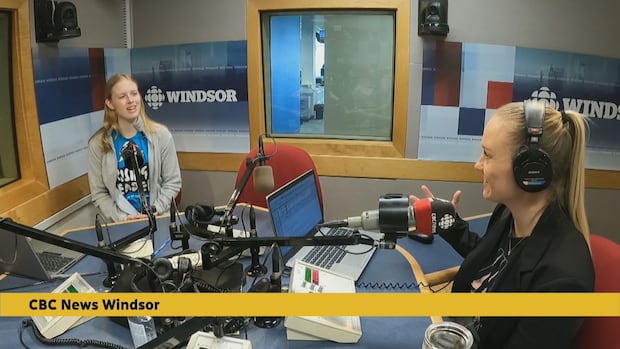
Earlier this month, Lily Steinhoff and her parents attended the annual Tourette Association of America Advocacy day on Capitol Hill in Washington, D.C. The Leamington resident, who has Tourette syndrome, has been receiving training as a rising leader and advocate within the Tourette Association of America organization.
Typically, Tourette syndrome is diagnosed during childhood, with symptoms often peaking between the ages of eight and 12, according to experts.
As noted by Tourette Canada, tics are part of a grouping of neurological disorders known as tic disorders. It is estimated that tics can affect up to 1 in 5 children of school age at some point.
There are various medical and behavioral treatments available.
Some individuals see improvement during their teenage years, while about 25% of those diagnosed continue to experience symptoms throughout their lives, according to Dr. Tamara Pringsheim, a neurologist and professor at the University of Calgary, who treats and researches Tourette syndrome.
The exact causes of Tourette and related tic disorders remain unclear, as stated by Tourette Canada, which is based in Brampton, Ontario. The organization also noted that these conditions often run in families, and numerous studies suggest a genetic component, with ongoing research into genetic factors and other possible causes.
Many individuals with Tourette syndrome are also diagnosed with attention-deficit hyperactivity disorder (ADHD), obsessive-compulsive disorder (OCD), and learning difficulties.
What triggers Tourette and tics?
The Tourette Association of America indicates that approximately 10 to 15 percent of those with the syndrome experience coprolalia.
These outbursts may seem intentional but are not. The NIH’s Tourette information page reveals that individuals who attempt to suppress them often feel a buildup of tension before a tic manifests.
In a recent episode of CBC’s Hanomansing Tonight, Pringsheim, who is not part of Davidson’s medical team, was questioned about whether Davidson had unintentionally expressed his true feelings.
Like her colleagues, Pringsheim emphasizes that tics are involuntary. She recalled her first encounter with a patient suffering from Tourette syndrome.
“This patient began shouting racial slurs and sexist comments at me, and naturally, I’m a human being — certain words evoke emotions,” Pringsheim recounted.
She admitted to initially feeling offended and threatened.
“However, it only took a moment to recognize that this individual had no intention of harming or offending me with those words. They were devoid of meaning, and … he did not hold those beliefs about me.”
Regarding the origins of Tourette and the tics it entails, brain imaging research suggests that individuals with the syndrome exhibit neurological differences in their brain circuitry, according to Tourette Canada, which also points out that researchers are actively investigating the nature of these differences and whether other brain regions are implicated.