
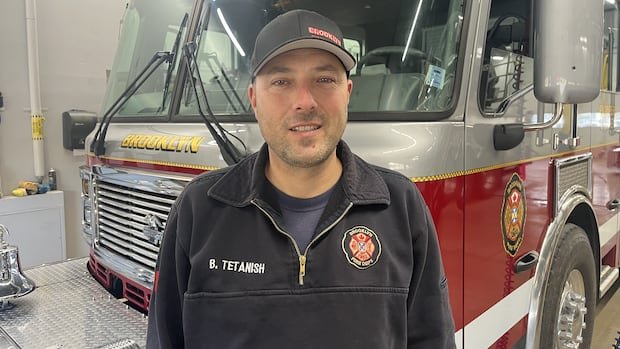
In May 2023, the Brooklyn Volunteer Fire Department, located approximately 40 minutes outside Halifax, anticipated a heightened risk of wildfires due to environmental conditions. During the “green-up” period, with new buds absorbing moisture and no foliage to cool the forest, the region experienced abnormally hot and dry weather for weeks.
Chief Brett Tetanish, during a training session, alerted his team about the elevated fire danger. Shortly after his warning, a fire erupted near the department’s station in Brooklyn, swiftly contained by firefighters. Subsequently, a large smoke column emerged on the horizon from a rapidly spreading wildfire in Upper Tantallon, 60 kilometers away.
Responding to the escalating fire, Brooklyn firefighters were dispatched to Halifax to safeguard structures. The scene they encountered, with burnt vehicles and flames flanking the roads, resembled situations more common in Alberta or British Columbia, according to Logan Hope, Brooklyn’s deputy fire chief.
Over three days, the Brooklyn firefighters fought the wildfire that ravaged 151 homes before returning exhausted. The unprecedented events highlighted a shift in challenges faced by the department, prompting reflections on the evolving climate crisis.
The Upper Tantallon wildfire represents one of several climate-related crises Brooklyn has confronted recently, straining the volunteer firefighters responsible for community safety. With future disasters looming, the firefighters are contemplating the adaptability of volunteer forces in such demanding circumstances.
In Canada, there are around 90,000 volunteer firefighters, constituting about 70% of the total firefighting workforce, as stated by the Canadian Association of Fire Chiefs. Nova Scotia relies heavily on approximately 7,400 volunteer firefighters for firefighting services, mirroring the national trend.
Established in the 1960s by community members in an old schoolhouse, the Brooklyn fire department has expanded to about 70 members. While municipal funding provides better equipment access, the department encounters challenges typical of volunteer forces in the province, notes Tetanish, a 35-year veteran of the department.
Amid escalating climate-related incidents, the Brooklyn fire department has witnessed a surge in emergency calls, a trend not unique to Nova Scotia. A 2023 report from the Canadian Association of Fire Chiefs highlighted the increasing call volumes related to climate emergencies, necessitating enhanced preparedness and response strategies.
Following the Upper Tantallon wildfire, the department invested in a sprinkler protection system using 50/50 funds, a proactive measure to safeguard structures from wildfires. This initiative, though initially met with skepticism, proved crucial in protecting properties during subsequent fire outbreaks.
In July 2023, unprecedented rainfall triggered devastating flash floods in the province, challenging the firefighters further. Members of the Brooklyn Volunteer Fire Department responded to distress calls, including rescues from floodwaters and extensive property damage. The catastrophic event claimed several lives, underscoring the lethal nature of climate-related disasters.
The department’s resilience was tested further in 2025 during a severe drought that sparked a wildfire in Annapolis County. Deploying the sprinkler protection system, Brooklyn firefighters successfully shielded numerous structures from the fast-spreading blaze, exemplifying the efficacy of proactive measures in mitigating wildfire risks.
As volunteer firefighters contend with prolonged wildfire seasons, the strain on resources and personnel intensifies, prompting calls for enhanced support and coordination from governmental agencies. The escalating wildfire risks, as projected by the World Meteorological Organization, underscore the urgency for collaborative efforts to address the mounting challenges posed by climate change.
In light of these evolving threats, the Brooklyn firefighters advocate for community engagement and adherence to wildfire mitigation practices, emphasizing the importance of proactive measures in safeguarding lives and properties. As climate-related crises escalate, fostering a collective spirit of resilience and preparedness is deemed crucial in navigating the turbulent times ahead.