
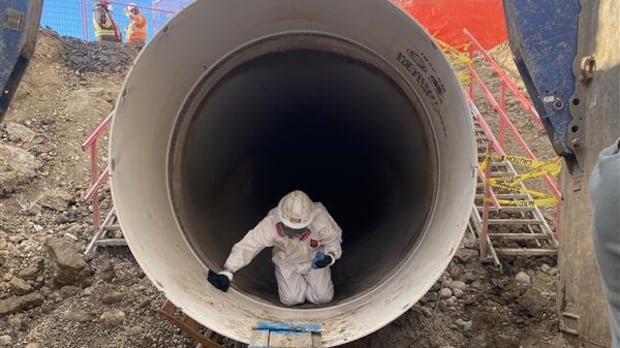
The city council has decided to progress with the suggestions outlined in an independent panel’s evaluation of the 2024 incident involving the primary water feeder main in the city. This decision came after Mayor Jeromy Farkas emphasized the importance of implementing the proposed changes without constraints.
Following a lengthy debate on Wednesday night, the council unanimously agreed to initiate the work based on the recommendations put forth. The recently released report highlights the critical need to address longstanding systemic challenges associated with Calgary’s water infrastructure.
According to the report, concerns regarding the potential failure of the pipe were initially raised in 2004 after a similar feeder main in northeast Calgary ruptured. However, over the following two decades, the city consistently postponed inspections, monitoring, and risk mitigation efforts related to the feeder main.
Despite recognizing the Bearspaw feeder main as a high-consequence risk, resources were often diverted to other areas due to the perceived low likelihood of failure, as outlined in the review. The panel’s recommendations include expediting the twinning of the Bearspaw feeder main by early next year, repairing and maintaining the existing pipe, and establishing a dedicated water utility department overseen by an independent board of experts.
The urgency of these recommendations was underscored in the report, citing the high vulnerability of the pipe to potential catastrophic failures in the future. Mayor Farkas stressed the need for full implementation of the panel’s suggestions, emphasizing the importance of not cherry-picking and committing to the outlined roadmap for improvements.
The report also highlights the need for redundancy in addition to a replacement line to strengthen Calgary’s water system. Farkas believes that addressing leaks and investing in the water system could enhance its affordability in the long term, ensuring safe and reliable drinking water for the city’s residents for years to come.
The panel identified persistent issues with the Bearspaw main, recommending inspections in 2017, 2020, and 2022, none of which were carried out. Governance challenges in water infrastructure management were attributed to a lack of expert support within successive city councils and management teams.
Acknowledging Calgary’s complex water system, the report notes the need for stable investments to maintain infrastructure reliability. It suggests expediting steel pipe duplication, establishing a dedicated water utility department led by a chief operating officer, and creating an independent oversight board to guide long-term decision-making.
The panel expects most reforms to be implemented within a year, with a full transition to a city-owned water corporation within three years. The report emphasizes the necessity for a culture of accountability and proactive risk management to prevent future water system failures.
City council members sought detailed insights from the panel on the delayed water system improvements and guidance on implementing the report’s recommendations. Panelists expressed a high level of concern regarding the urgent need to address the water infrastructure challenges that have been neglected for too long.
The report’s findings underscore the importance of swift action to enhance Calgary’s water system resilience and prevent future catastrophic incidents like the recent feeder main breaks.