
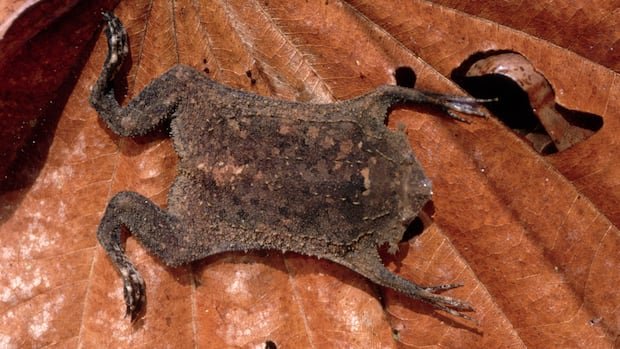
A unique characteristic of the Surinam toad has been discovered by scientists in California. Despite its odd appearance and limited vision, this toad is a skilled hunter that can sense and capture prey quickly. Researchers found that the toad uses its fingertips to detect the subtle movements of nearby prey in the water. These fingertips, resembling star-shaped lobes, are highly sensitive touch organs that can identify the size and proximity of potential prey.
The toad’s fingers contain numerous touch-sensitive nerves, making them capable of detecting prey without direct contact. Each fingertip has 128 tiny lobes with dome-shaped bumps called papillae, which enhance touch sensitivity. These findings suggest that despite the toad’s small size and simple brain structure, a significant portion of its brain is dedicated to processing sensory information from its fingertips.
This discovery is significant as it sheds light on a strategy previously thought to be unique to more complex mammal brains. It indicates a common evolutionary solution among vertebrates, highlighting how different species have adapted to maximize sensory information processing. Understanding these adaptations in lower vertebrates like amphibians provides valuable insights into the evolution of sensory systems across species.