
Happy New Year! Welcome to our weekly newsletter focusing on environmental trends and solutions driving us towards a more sustainable future.
Greetings, it’s Bridget. With the recent ban on fluorescent light bulbs in Canada starting on Jan. 1, I delved into the reasons behind this switch and explored the alternatives available.
This week’s highlights include:
– LEDs taking the spotlight in 2026, pushing fluorescent bulbs out
– The impact of disappearing ski weather days
– How fireguards, designed for human protection, also benefit wildlife
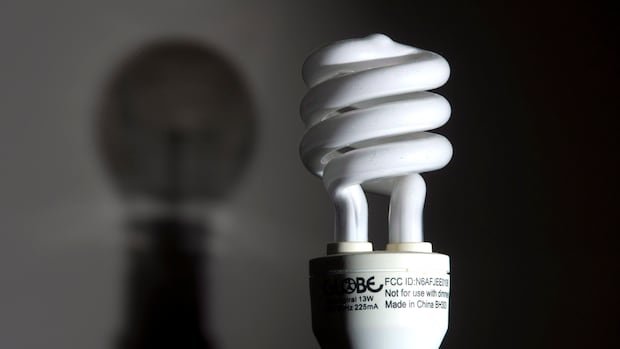
As of Jan. 1, Canada has initiated a nationwide prohibition on the import and production of compact fluorescent light bulbs containing mercury. This ban specifically targets spiral fluorescent bulbs commonly used in household lamps, not the long tubes prevalent in industrial settings.
Environment and Climate Change Canada (ECCC) unveiled its strategy to phase out mercury-containing lamps in 2024, aligning with Canada’s commitment to the Minamata Convention on Mercury and expediting the Products Containing Mercury Regulations, effective since 2015.
Mercury poses a significant threat as it accumulates in the food chain, posing health risks to humans and animals by affecting the nervous, digestive, and immune systems.
According to an ECCC spokesperson, retailers have until 2030 to sell their existing stock.
Prof. Olivier Trescases, an expert in electrical and computer engineering at the University of Toronto, deems compact fluorescent light bulbs obsolete. Trescases emphasizes that incandescent lights, while producing pleasing natural light, are highly inefficient, with over 90% of energy wasted as heat. Although fluorescent lights are more energy-efficient than incandescent, their light quality is inferior, and flickering can trigger migraines.
Trescases champions blue light-emitting diodes (LEDs) as the superior choice, citing their energy efficiency, longevity, and improved color quality, without the mercury content present in other bulbs.
The evolution of environmentally friendly options, like LEDs, becoming more cost-effective and efficient over time, mirrors a broader trend in eco-friendly technologies displacing older, harmful alternatives.
When replacing fluorescent bulbs with LEDs, proper disposal is crucial to prevent mercury leaching. Collection sites for old fluorescent bulbs, including recycling depots and return-to-retail programs, are available to prevent environmental contamination.
In a bid to foster a greener lifestyle, tell us about your climate and environmental resolutions for 2026 at whatonearth@cbc.ca.
Thank you for reading. Stay tuned for weekly updates straight to your inbox every Thursday.
Editors: Emily Chung and Hannah Hoag | Logo design: Sködt McNalty