
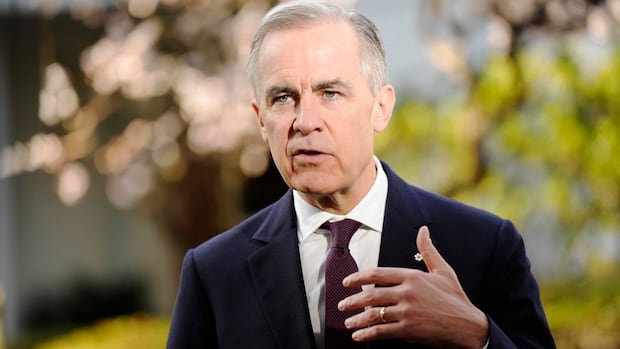
Prime Minister Mark Carney revealed a funding injection of $3.8 billion to safeguard nature on Tuesday, aligning with the government’s conservation objectives. Besides public contributions, the government aims to attract private sector investments to support the conservation plan, which entails establishing new national parks and marine reserves.
During a press briefing in Wakefield, Que., Carney highlighted the necessity of substantial funding for the ambitious task of creating these protected areas, emphasizing that public funds alone would not suffice. The government’s goal is to safeguard 30% of Canada’s lands and waters by 2030, with the current protected land area standing at 14%.
The conservation targets were set by the Trudeau administration following the UN Biodiversity Conference (COP15) in Montreal in 2022. Concerns have been raised by environmental organizations in recent months regarding the government’s ability to match its conservation aspirations with sustainable funding commitments.
Carney outlined that the new funds would be allocated across three core areas: protecting nature, fostering national development, and placing value on nature while mobilizing financial resources. Immediate actions include establishing two new conservation sites: the Wiinipaawk Indigenous Protected Area and National Marine Conservation Area in eastern James Bay, Quebec, and the Seal River Watershed National Park in Manitoba.
Moreover, the government plans to implement “other effective area-based conservation measures” that allow for land and water conservation alongside compatible activities. Proposals include developing up to 14 new marine-protected and conserved areas, along with up to 10 new marine conservation zones. Notably, marine areas like Sarvarjuaq and Qikiqtait in the Arctic would safeguard endangered species such as polar bears, walruses, and beluga whales.
If realized, these new marine protected zones would cover 12% of Canada’s waters, increasing the total protected waters to 28%. Carney affirmed the government’s commitment to bridging the conservation gap, stating, “We’ve got work to do to close that gap, and we will close that gap.”
However, the federal Conservatives criticized Carney’s announcement as “illusions,” with Office of the Leader of the Official Opposition spokesperson Sam Lilly denouncing the move as a diversion tactic to mask past environmental shortcomings. Lilly accused the government of perpetuating a cycle of setting and missing targets while squandering taxpayer money on bureaucratic endeavors.
This latest initiative underscores the government’s proactive stance on environmental preservation and signals a significant step towards meeting its conservation objectives in the coming years.