
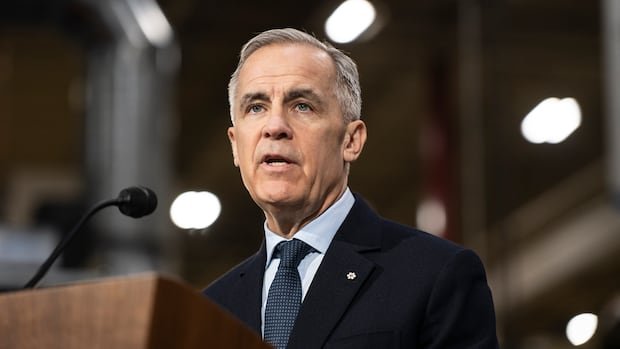
Prime Minister Mark Carney revealed that he had a discussion with his U.S. counterpart early on Tuesday regarding the Gordie Howe International Bridge, which Donald Trump had threatened to obstruct. Carney emphasized that Canadians fully funded the bridge, and the Americans already have a stake in its ownership.
Carney clarified to Trump that the Canadian government invested approximately $4 billion in constructing the Windsor-Detroit bridge, utilizing workers and steel from both Canada and the U.S., despite the president’s erroneous claims about minimal U.S. involvement. Contrary to Trump’s assertion, the bridge is jointly owned by Canada and Michigan.
The Canada-Michigan Crossing Agreement, established in 2012, solidifies the shared ownership of the bridge between the two jurisdictions, even though Canada covered all initial construction expenses. The Windsor-Detroit Bridge Authority, a Canadian Crown corporation, will oversee the bridge’s operations. Jointly managed by an equal number of representatives from Canada and Michigan, the International Authority supervises the bridge’s activities.
Carney highlighted the bridge as a symbol of cooperation between the two nations, expressing anticipation for its opening. He emphasized the bridge’s significance in facilitating trade, tourism, and travel between Canadians and Americans.
Ontario Premier Doug Ford downplayed Trump’s recent anti-Canada remarks, expressing confidence in the bridge’s eventual opening. Ford emphasized the economic benefits the bridge would bring to the American economy, citing support from Michigan politicians who condemned Trump’s statements and endorsed the bridge’s construction.
Trump had previously expressed eagerness for the Gordie Howe International Bridge’s completion in a joint statement with former Prime Minister Justin Trudeau. The bridge has already spurred economic growth in local communities on both sides of the border.
Furthermore, Carney discussed issues related to the Canada-U.S.-Mexico Agreement (CUSMA) with Trump during their conversation. Trump’s trade representative, Jamieson Greer, indicated that negotiations specific to the bridge would occur, with the U.S. seeking a share of toll revenues generated by the bridge.
Greer emphasized the U.S.’s larger economy and the need for fair compensation for allowing goods to enter its territory. He underscored the importance of ensuring that the U.S. receives a portion of the bridge’s revenue to preserve economic interests and national security.
Apart from the bridge discussions, Greer mentioned challenges in early CUSMA negotiations with Canada. He highlighted unresolved issues, such as access for U.S. farmers to the Canadian dairy market and the cessation of U.S. liquor boycotts in certain provinces, as crucial elements for CUSMA’s successful review process this year.