
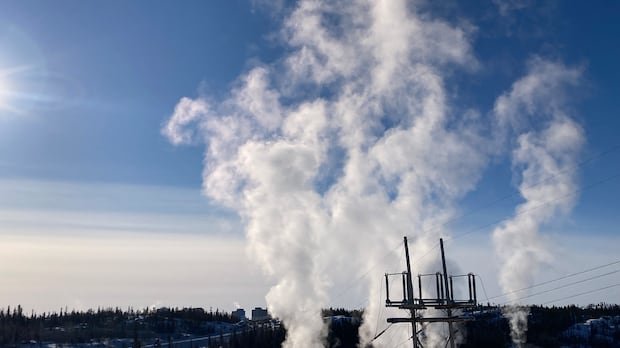
The Canadian federal government is investing significant funds to explore innovative ways in which nuclear energy can bolster the infrastructure in the northern regions.
In a recent development, the government awarded $4.5 million to the Canadian Strategic Missions Corporation (CMSC) to propel the advancement of Canadian-made energy solutions aimed at enhancing security in the North. The corporation announced that this investment is a crucial step towards expediting the development of their micro-nuclear reactor for detailed design and a fueled demonstration, preparing the technology for deployment in the Arctic.
Specializing in deploying micro-nuclear reactors to remote and harsh environments, the company’s CEO, Daniel Sax, highlighted their focus on constructing small nuclear reactors for Arctic regions to replace existing diesel generators. Unlike traditional nuclear reactors in Canada that can generate around 800 megawatts, the microreactors Sax is working on are much smaller, potentially producing between one and 50 megawatts, with their reactor being comparable in size to a desk.
The transition from diesel to nuclear energy is anticipated to bring cleaner and more reliable energy to northern communities, contributing to the security of Canada’s Arctic. Sax aims to conduct a demonstration of the nuclear reactor by 2028, with plans to deploy the technology by 2030, although the specific location in the North is yet to be determined.
The Department of National Defence (DND) in Canada confirmed its initiation of a multi-year program to assess the feasibility of deploying a small nuclear reactor in the Arctic. The DND emphasized that microreactors could bolster energy security and reliability in the region while reducing greenhouse gas emissions associated with defense operations.
Ryan Clarke from Canadian Nuclear Laboratories expressed interest in the potential of nuclear power to address energy challenges in the North, citing the inefficiency and environmental impact of relying on diesel fuel. He noted that microreactors could offer extended fueling cycles of up to two decades, significantly improving energy supply chains in remote areas.
Despite the promising prospects of microreactors, concerns persist regarding their suitability in extreme climate conditions, including the potential impact of heat generation on permafrost stability and the management of nuclear waste. Northwestern Ontario has been identified as a possible site for Canada’s first deep geological repository for nuclear waste, with the federal government considering expediting the construction timeline for this crucial project under the Building Canada Act.