
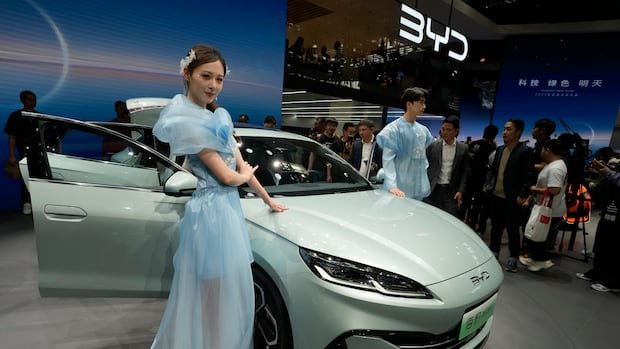
The electric vehicle market in the country is set for a significant shift as Prime Minister Mark Carney has made a move to allow Chinese-made EVs into Canada by reducing the import tariff from 100 per cent to six per cent. This decision comes in response to the growing demand for more affordable and environmentally friendly EV options. Max Morris, sales manager at Shift Electric Vehicles in Ontario, highlighted that Chinese EVs entering the market would offer customers a wider selection and advanced technology.
While some individuals are welcoming the expansion of the EV market, concerns have been raised regarding the safety and security implications of vehicles associated with the Chinese government. China has been a major player in the global EV industry, boasting over 100 EV brands, with notable names like Geely, Chery, MG, Wulin, and Tesla, which also manufactures some models in China. BYD, in particular, emerged as the world’s top EV seller, surpassing Tesla last year.
Under the new tariff agreement, up to 49,000 Chinese EVs annually will be permitted in Canada initially, accounting for less than three per cent of the overall car market. This number is expected to increase to around 70,000 over the next five years. Despite the previous 100 per cent tariff, Canadian consumers were already exposed to Chinese EVs from companies like Polestar, Volvo, and Tesla.
The move to allow Chinese EVs into Canada has sparked interest among potential buyers due to the cost savings compared to existing EV models in the market. Chinese EVs can be priced $10,000 to $15,000 lower than similar-sized and ranged vehicles already popular in Canada. This affordability factor could attract first-time EV buyers and encourage existing owners to consider switching to Chinese brands.
Regarding the arrival timeline, the exact schedule remains uncertain, but new Chinese EVs could potentially reach Canadian ports within weeks. Addisu Lashitew, an associate professor at McMaster University, emphasized the importance of streamlining regulatory processes to expedite the entry of Chinese EVs into the market. Additionally, safety and cybersecurity concerns surrounding Chinese-made vehicles have been raised, prompting a need for thorough assessment and mitigation strategies by the government.
In conclusion, the decision to open the Canadian market to Chinese EVs signifies a significant development in the country’s automotive industry, offering consumers more choices and potentially driving down prices for EVs. The impact of this policy change on the market dynamics and consumer preferences remains to be seen.