
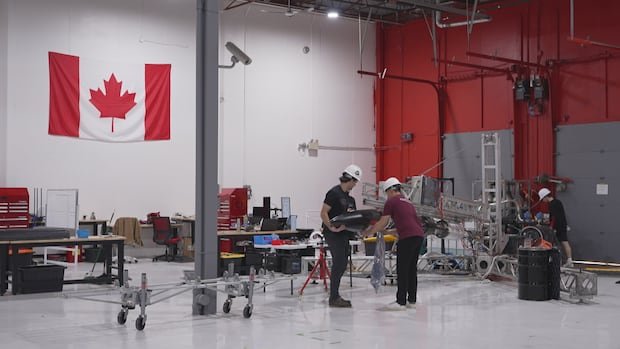
Canada, being the only G7 nation without its own launch capabilities, is striving to develop a Canadian-made rocket. Several Canadian companies are in a race to provide the country with its means to access space promptly. This initiative comes as concerns arise among some SpaceX customers about a potential decrease in orbital rides offered by the industry leader.
The journey to establish Canadian space launch capabilities is complex due to the high costs, tight deadlines, and evolving government priorities. With Canada lacking the capacity to launch rockets domestically, local customers, both private entities and government agencies, rely on external providers to deploy their satellites into orbit. Notably, SpaceX launched all 12 Canadian satellites in 2025, as reported by the Canadian industry publication SpaceQ.
These satellites play crucial roles in telecommunications, military operations like threat detection, and environmental monitoring such as wildfire tracking, according to Marc Boucher, the founder of SpaceQ. The lack of control over launch operations raises concerns that foreign entities might refuse to launch Canadian technology in the future.
To address these challenges, the Canadian government has identified space as a key sovereign capability in its Defense Industrial Strategy. Legislative measures have been introduced to authorize launches from Canadian soil, pending approval. Financial support is also being provided, with three Canadian companies receiving $8.3 million each to develop light-lift rocket capabilities by 2028.
Among these companies is NordSpace, established in 2022, focusing on satellite development, robotic space technologies, and launch infrastructure. Despite facing setbacks in its initial suborbital rocket test in 2025, NordSpace is gearing up for another attempt soon. Another player, Reaction Dynamics, has been working on an innovative engine design since 2017, aiming to achieve orbit capabilities by 2028.
Canada Rocket Company, a newcomer in the industry, is working on a medium-lift rocket powered by nine methalox-fueled engines. With significant private investment and government backing, the company aims to reach space by 2032 and is constructing a $30-million test facility in London, Ont.
As SpaceX plans to phase out its Falcon 9 rocket in favor of the Starship, concerns arise among satellite customers about potential disruptions in launch services. This transition could create opportunities for emerging rocket manufacturers to fill the gap left by SpaceX. Companies like Rocket Lab are expected to cater to the demand, although smaller players relying on rideshare programs may face challenges.
The developments in the space launch industry underscore the importance of establishing a Canadian rocket manufacturing capability. With private and public funding flowing into the sector, the prospects for Canadian space ventures are becoming more promising. However, achieving regular launches from Canada will require sustained investment, collaboration, and a long-term commitment to the industry’s growth.