
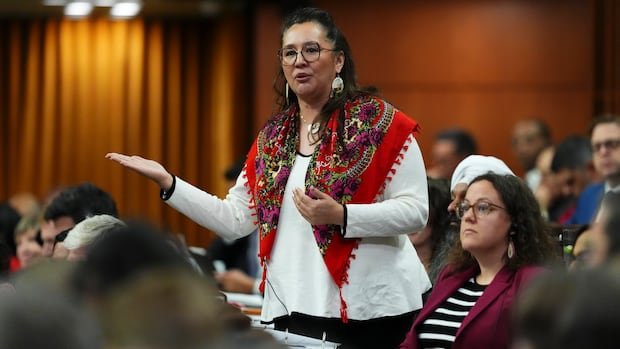
Prime Minister Mark Carney’s administration is unveiling a new initiative valued at over $35.5 billion to ensure the well-being and cultural connection of First Nations children with their communities and families. This proposal, although lower in amount compared to the $47.8 billion plan put forth by former Prime Minister Justin Trudeau over a decade, has a distinct feature: a $4.4-billion yearly commitment from 2033-34 onwards after the initial funding is utilized.
Indigenous Services Minister Mandy Gull-Masty briefed CBC News about the specifics before the official announcement in Ottawa on Monday, coinciding with the scheduled submission of the government’s plan for reforming on-reserve child welfare to the Canadian Human Rights Tribunal.
Gull-Masty emphasized the urgency of implementing a system where children in need of care are surrounded by their own community, loved ones, and those who can nurture their heritage, identity, and language to avoid prolonged legal disputes and ensure the well-being of the children.
Besides the government’s proposal, the tribunal is also evaluating an alternative plan presented by a coalition of First Nations chiefs and child advocates known as the National Children’s Chiefs Commission, working alongside the First Nations Child and Family Caring Society.
The proposed reforms are coming forth nearly a decade after a significant ruling by the tribunal, which called out Ottawa for discriminatory underfunding of First Nations child services. The government aims to secure the funding in a legally binding agreement to safeguard it from political changes and make it accessible promptly.
The government is aiming for a national reform strategy while seeking regional collaborations with First Nations groups to customize service delivery according to their specific needs. Gull-Masty stressed that local communities should have a say in determining their care standards to align with their unique identity.
Gull-Masty’s personal connection to the issue adds depth to her commitment, having served as the first female grand chief of the Cree Nation Government in Quebec before entering federal politics. She expressed her willingness to collaborate with all concerned parties to bridge gaps and work collectively towards a common goal.