
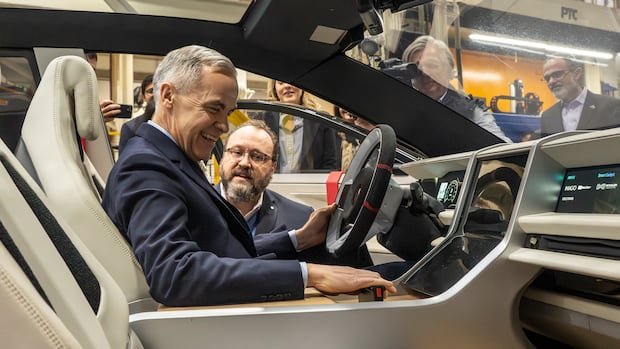
Prime Minister Mark Carney is overturning Canada’s electric vehicle mandate, which previously required all new vehicles to be electric within a decade, marking a shift from another environmental policy established during Trudeau’s administration. Carney is rolling out a new plan by implementing stricter greenhouse gas emission standards for vehicle models from 2027 to 2032 to incentivize automakers to manufacture more zero-emission vehicles.
During a news conference at an auto parts manufacturer in the Greater Toronto Area, Carney stated, “Canada will chart a new, more ambitious course to reduce car emissions.” The government is enhancing its GHG emissions standards twofold and allowing the industry flexibility in achieving these targets, be it through plug-in hybrids, electric vehicles, or more fuel-efficient internal combustion engine vehicles.
The latest national automotive strategy, introduced by the government, aims to safeguard Canada’s automotive sector and jobs amidst President Donald Trump’s inclination to relocate vehicle production southward. Additionally, Ottawa seeks to revitalize the country’s battery-powered vehicle industry.
Carney anticipates that the new emissions framework will result in 75% of new car sales in Canada being electric by 2035, a commendable goal, albeit lower than the previous mandate that Carney is revoking. While precise calculations on the carbon pollution reduction are pending, Carney mentioned that the model is based on “grams per mile,” translating to a 57% reduction in vehicle emissions nationwide.
The Liberal government, under Carney’s leadership, is launching a $2.3 billion program to provide incentives of up to $5,000 for electric vehicles and up to $2,500 for plug-in hybrids to consumers and businesses. To qualify for rebates, plug-in vehicles must be priced under $50,000 and manufactured by countries with which Canada has free trade agreements, excluding vehicles made in China. The rebates will gradually decrease starting next year until the program’s scheduled conclusion after 2030.
The government is also working on establishing more partnerships to expand the network of EV charging stations across Canada. Carney emphasized the necessity of simplifying the vehicle charging process, stating that it should be as convenient as refueling a gas tank, especially in rural and northern regions.
To retain automakers in Canada and counter potential U.S. tariffs, Ottawa intends to offer more tariff relief to Canadian automakers. Carney outlined plans to enhance Canada’s automotive remission framework through a tradeable credit system, incentivizing companies that invest in Canadian production while imposing obligations on those seeking to sell vehicles in Canada without tariff payments.
Furthermore, funds from the Strategic Response Fund and the Regional Tariff Response initiative will support diversification efforts within the auto sector. Carney has reversed several environmental policies from the Trudeau era, including the consumer carbon tax, commitment to oil and gas emissions caps, and the tree-planting pledge.
Ontario Premier Doug Ford voiced support for the federal government’s new auto strategy, emphasizing the importance of ending the electric vehicle mandate to enhance the competitiveness of Ontario’s automotive sector. The government’s fresh approach aligns with the declining trend in electric vehicle sales, attributed to the pause in the EV rebate program, economic uncertainties related to tariffs, and reduced interest in electric vehicle manufacturer Tesla, according to a StatsCan analysis.