
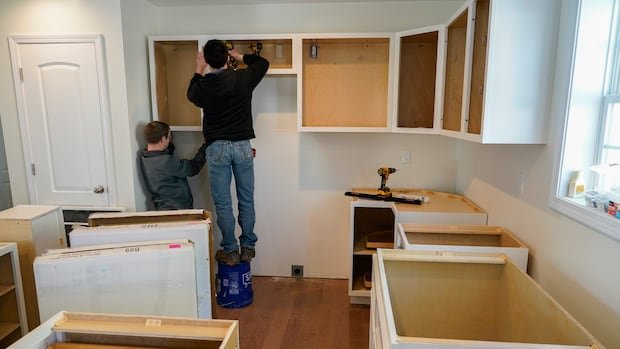
The Canadian Kitchen Cabinet Association has expressed gratitude for the postponement of tariff increases on furniture, cabinets, and vanities by U.S. President Donald Trump. Despite this, the industry continues to suffer from the impact of the existing duties. The initial 25 per cent tariffs imposed in October were set to increase to 30 per cent for upholstered furniture and 50 per cent for cabinets and vanities on January 1, but this escalation has been put on hold.
Luke Elias, the association’s vice-president, mentioned that although the relief of a 50 per cent tariff is acknowledged, the industry is still struggling to recover from the initial 25 per cent duty. The kitchen cabinet manufacturing sector in Canada, valued at $4.7 billion, exports approximately $600 million worth of products annually, with Trump’s tariffs exacerbating challenges faced due to a subdued Canadian housing market.
Ralph Fehr, the president of Manitoba-based Elias Woodwork, which employs over 400 individuals and exports 80 per cent of its products to the U.S., emphasized the detrimental impact of the 25 per cent tariffs. Fehr highlighted that a 50 per cent duty would have been catastrophic for the business, affecting customer preferences in the U.S.
Fehr noted that his company relies on American materials, like hardwood lumber from the Appalachians, to create finished products sold in the United States. He expressed hope for government intervention to negotiate a favorable agreement to support businesses affected by the tariffs.
The industry has witnessed layoffs since the implementation of Trump’s tariffs in October, with concerns raised about potential job losses in the sector. Elias emphasized the urgency of addressing industry challenges and ensuring that the cabinet and furniture sector is not overlooked during the upcoming review of the trilateral trade agreement, CUSMA.
The importance of extending taxpayer incentives to support the building industry at both federal and provincial levels was stressed by Elias. Additionally, concerns were raised about the influx of low-priced parts from Asia being assembled in Canada and sold in the U.S. under a “made-in-Canada” label, undermining domestic manufacturers.
As discussions surrounding CUSMA intensify, efforts to strengthen rules-of-origin requirements are underway. The American Kitchen Cabinet Alliance aims to prevent the dumping of cheap products in Canada or Mexico, emphasizing the need to protect North American industries from unfair trade practices.
With negotiations expected to be challenging, it is crucial to address the impact of tariffs on the cabinet and furniture industry, which employs thousands of Canadians. The sector plays a significant role in households across the country, highlighting the necessity of supporting these businesses during trade discussions.