
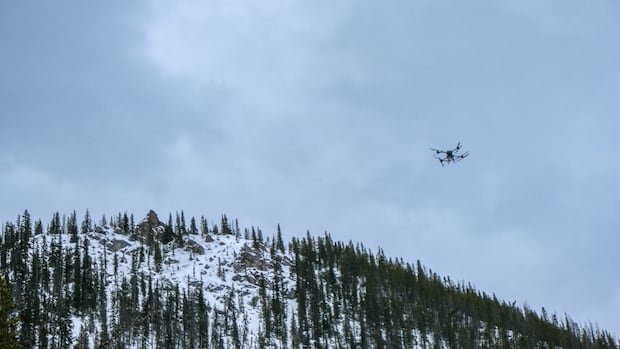
A Canadian company has innovatively employed drones for avalanche control instead of traditional methods like artillery or explosives from helicopters. Aerial Vehicle Safety Solutions Inc. (AVSS) received approval from the federal government to test its SnowDart system for avalanche mitigation last year. During this winter season, AVSS conducted tests of this technology in Jasper National Park. The company’s approach involves using a drone to transport an explosive to a mountain, dropping it onto the slope, and then remotely detonating it. Co-founder Josh Ogden described this as an additional option for avalanche control tools.
In Canada, various methods have historically been used for avalanche control, such as 105 mm howitzer guns deployed by the Royal Canadian Horse Artillery to trigger avalanches by creating shockwaves on mountain slopes. Parks Canada also uses helicopters to strategically drop explosives for avalanche prevention. In certain locations, remote trigger stations are installed on slopes. According to Ogden, drones offer advantages in inaccessible areas where artillery guns or trigger stations are not viable, and they can be cost-effective compared to helicopters.
This winter has been challenging for avalanche control in Western Canada, particularly along a 43-kilometer stretch of Highway 1 in Glacier National Park, British Columbia. The road faces threats from 135 avalanche paths, resulting in increased closures for avalanche control operations. The closure hours totaled 191 this winter, nearly eight days, compared to the usual 79 hours in an average winter. The rise in closures was attributed to exceptionally snowy conditions in December and an atmospheric river in March.
Looking ahead, industries are increasingly exploring drone technology for various applications, including avalanche risk management. While drones may enhance avalanche control measures, they are not expected to replace existing methods due to their weather-dependent nature, as noted by Deryl Kelly from Parks Canada. AVSS plans to continue testing the drone technology next winter, with potential adoption by other mountainous regions in Canada.
Brian Rode, vice-president of the Marmot Basin ski resort in Jasper National Park, expressed optimism about the potential of using drones for avalanche control. The ski resort is monitoring the development of this technology and its market availability. In the interim, the resort will continue utilizing explosive charges for avalanche mitigation.