
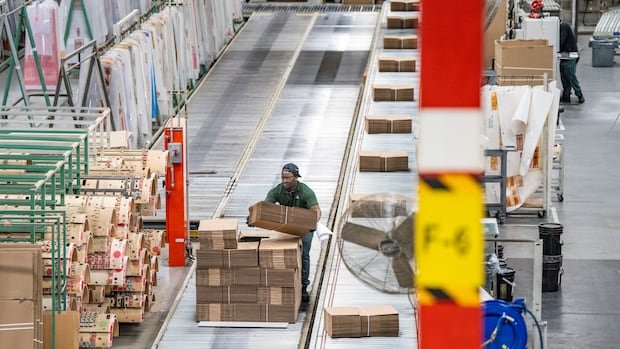
Statistics Canada has reported that the Canadian economy expanded for the fourth consecutive month in February, although there were indications of a slowdown towards the end of the first quarter. Real gross domestic product (GDP) increased by 0.2% in February, with the manufacturing sector leading the growth at a rate of 1.8%, the highest in over three years.
The growth in manufacturing was primarily driven by the machinery subsector and gains in transportation equipment manufacturing. Notably, several auto plants in Ontario resumed operations in February after a period of shutdown for upgrades and maintenance. However, on a yearly basis, manufacturing activity was down by 3.1% in February due to trade tensions with the United States.
Wholesale trade and transportation and warehousing sectors also contributed to the economic uplift in February, while a decline in the public sector and a slowdown in the arts, entertainment, and recreation industry had a dampening effect on growth. Spectator sports activity was particularly subdued in February due to the NHL hiatus for the Olympics Games.
The February performance aligned with early estimates and marked the fourth consecutive month of economic expansion. Initial estimates for March suggest that real GDP remained stable, setting the first quarter on track for an annualized growth rate of 1.7%. Although gains in wholesale trade and transportation and warehousing continued in March, they were offset by decreases in retail trade and mining, quarrying, and oil and gas extraction.
The Bank of Canada’s recent monetary policy report projected a 1.5% annualized growth for the first quarter. Statistics Canada will release updated GDP figures for March and the first quarter at the end of May.