
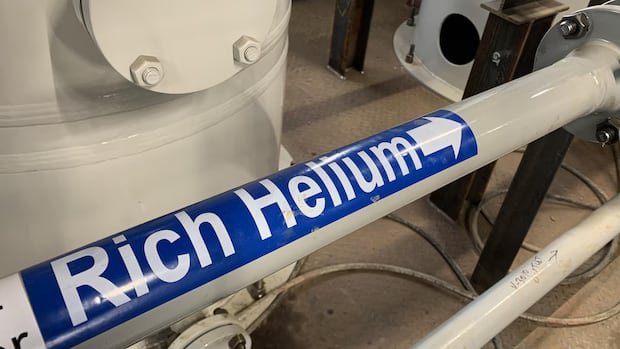
In Western Canada, the helium industry is experiencing a surge due to the global helium shortage resulting from conflicts in the Middle East and the closure of the Strait of Hormuz. With Qatar, a major helium supplier, facing export challenges and facility damages, Canadian helium producers are benefiting from rising demand, prices, and investor interest.
The U.S.-Israeli conflict with Iran has led to a doubling of helium prices, raising concerns about shortages worldwide. Helium, crucial for various applications like medical MRI systems, rocket ships, semiconductor manufacturing, welding, and party balloons, is facing supply disruptions, driving up interest in Canadian helium production.
Despite Canada being the fifth-largest holder of helium reserves according to the U.S. Geological Survey, its current production is limited. Companies in Alberta and Saskatchewan are focusing on exploration and development, requiring investment in production facilities, pipelines, well drilling, and workforce expansion.
The helium industry lacks a transparent pricing system compared to other commodities, primarily trading through fixed contracts. Following geopolitical events like the Russian invasion of Ukraine and conflicts in the Middle East, helium prices have surged, benefiting Canadian producers.
As demand for helium grows and industries seek diversified supply chains, Canadian companies preparing to extract helium in the Prairies are poised for success. However, a key challenge for the domestic industry is the lack of a helium liquefaction facility in Canada, essential for storage and global transport. Researchers emphasize the need for a secure domestic helium supply for critical instruments and equipment.
Efforts are underway to lobby the government for tax incentives and support to develop a domestic helium supply chain. The Department of Finance acknowledges the importance of enhancing the tax system to foster growth in the natural resources sector while balancing economic priorities and budget considerations.