
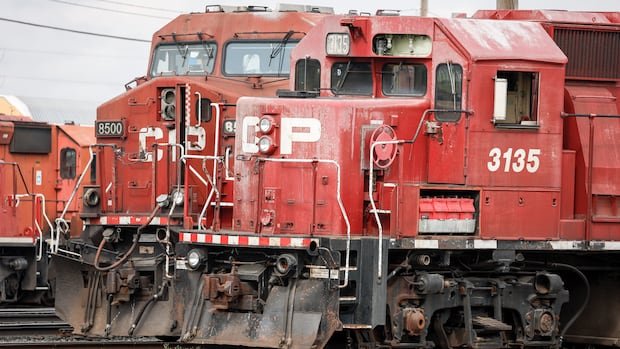
Canadian Pacific Kansas City Ltd. revealed a financial setback of $200 million due to the ongoing tariff conflict initiated by the United States, as stated by CEO Keith Creel. Despite this, Creel remained optimistic amidst uncertainties surrounding the North American free trade agreement.
During a conference call with analysts, Creel mentioned that the company has already felt a significant impact, estimating around $200 million in revenue losses. As the head of the sole railway spanning the three North American countries, Creel emphasized the potential benefits of renegotiating the United States-Mexico-Canada Agreement. He highlighted the importance of trade among the three nations and the need to balance cargo flows to address the trade deficit concerns raised by President Donald Trump.
Creel expressed hope for a positive renewal of the USMCA, stressing the mutual success that trade brings to all three countries. He anticipated a potential agreement renewal before the midterms, emphasizing the resilience needed to navigate through challenging times.
In its recent quarter, CPKC saw a modest increase in revenue to $3.92 billion, driven partly by enhanced operational efficiency and a slight uptick in freight volumes. Despite a rise in revenue, the company reported a 10% decrease in profits, attributing the decline to various factors, including trade uncertainties.
Apart from trade issues, the rail industry faced additional concerns following Union Pacific Corp.’s proposal to acquire Norfolk Southern Corp. in a significant deal worth $85 billion. Creel voiced apprehensions about the potential merger’s impact on competition and market dynamics, cautioning against consolidations that could disrupt the rail transportation system.
The Surface Transportation Board in the U.S. rejected the merger application as incomplete, prompting further discussions and evaluations. Amid speculations about the merger’s approval under the current administration, CPKC reported a three percent increase in core adjusted diluted earnings, falling slightly below analysts’ projections.
Looking ahead, the Calgary-based company forecasted moderate volume growth and a rise in core adjusted diluted earnings per share for the coming year. Additionally, they planned to reduce capital expenditures and announced a quarterly dividend for shareholders.
Overall, the railway industry continues to navigate challenges and uncertainties, emphasizing the importance of strategic decisions and resilience in the face of evolving market dynamics.