
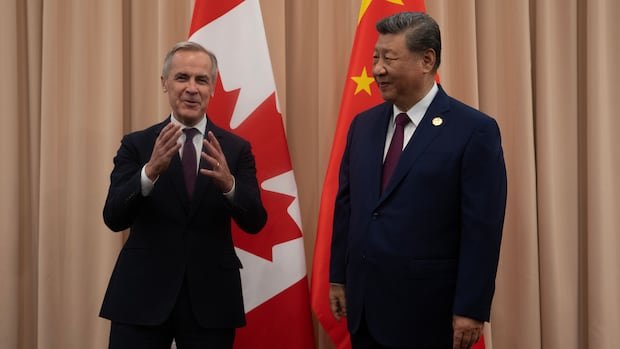
Canadian Prime Minister Mark Carney is scheduled to embark on a visit to China next week, marking the first official visit by a Canadian leader to the country since 2017. The Prime Minister’s Office (PMO) announced that the trip, taking place from Jan. 13 to 17, will involve discussions between Carney and Chinese President Xi Jinping on various topics including trade, energy, agriculture, and international security.
Carney expressed the importance of diversifying Canada’s economy in response to global trade disruptions, shifting from reliance on a single trading partner to fostering stronger and more resilient global connections. The visit stems from a previous meeting between Carney and Xi at the Asia-Pacific Economic Cooperation (APEC) summit in South Korea, where the Chinese President extended an invitation for a formal visit.
During his stay in China, Carney will also engage with Chinese Premier Li Qiang and other government officials before traveling to Doha on Jan. 18 for a meeting with Qatar’s emir, Sheikh Tamim bin Hamad Al Thani. Following that, Carney is set to attend the World Economic Forum in Davos, Switzerland, from Jan. 19 to 21 to engage with business leaders.
The visit comes against a backdrop of trade tensions between Canada and China, with disputes over tariffs on Chinese electric vehicles and Canadian agricultural products. Former China-based diplomat Michael Kovrig highlighted the ongoing efforts to mend the strained relationship between the two countries. Kovrig emphasized the significance of diplomatic channels in resolving disputes and maintaining national interests amid expanding trade relations.
The Opposition Conservatives criticized Carney’s frequent international travels, questioning the productivity and impact on Canadian interests. Conservative Leader Pierre Poilievre’s office issued a statement condemning the prime minister’s global engagements, calling for a focus on domestic policy concerns rather than extensive international trips. Poilievre has been vocal in his criticism of international forums like the World Economic Forum, portraying them as platforms for global elites at the expense of working-class citizens.