
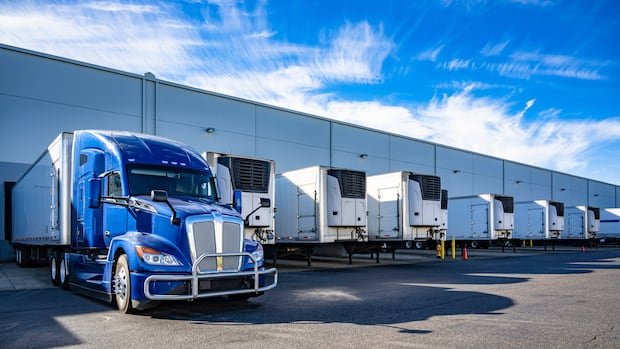
Canadians preparing for significant counter-tariffs are likely to experience price hikes not only on American aluminum, toilet paper, and furniture but also on the semi-trailers transporting these goods across the country. Ocean Trailer, the leading semi-trailer retailer in Western Canada, is anticipating a $45 million order of 600 trailers from U.S. manufacturers. The company is expediting the border crossing of these trailers before a 25% Canadian counter-tariff on trailers and various other items goes into effect.
Mack Keay, Ocean Trailer’s chief operating officer, stated that the 25% additional cost exceeds their profit margin per trailer, necessitating them to pass on the increase to customers. The federal government announced reciprocal countermeasures on $27.6 billion worth of U.S. goods in response to the recent tariffs imposed by President Donald Trump’s administration.
Ocean Trailer faces the challenge of potentially canceling some orders, which were scheduled to arrive gradually by the end of the year. Those trailers not cleared for entry into Canada by September 8 will either be stored in the U.S. or sold to American retailers, resulting in financial losses for the company.
Concerns ripple across the industry, with the Manitoba Trucking Association noting that most semi-trailers in Canada are sourced from the U.S. Many businesses are hastening shipments north of the border before the counter-tariffs take effect to avoid increased costs.
The two main types of semi-trailers commonly used in Canada are dry vans and refrigerated vans. Dry vans transport a wide range of goods, while refrigerated vans handle perishable items like groceries and pharmaceuticals.
The limited domestic manufacturing capacity in Canada poses challenges in meeting the surge in demand for trailers post-counter-tariffs. The industry is bracing for significant cost escalations, with average trailer prices expected to rise from $75,000 to around $95,000 due to the tariffs.
The implications extend to potential bankruptcies in the trucking sector if the trade war prolongs. The uncertainty surrounding trailer sales trends underscores the industry’s reliance on a diversified supply chain model. Rental demand is projected to surge as trucking companies defer purchasing U.S. trailers subject to higher tariffs.
The Manitoba Trucking Association underscores the critical impact of prolonged tariff wars on the industry, warning that extended durations could lead to financial distress and bankruptcies within the trucking sector and beyond.