
The term “rules-based international order” gained traction among Canadian officials beginning in 2017.
While not particularly poetic, it served a purpose — acting as a concise reference to the network of multilateral organizations (such as the UN, WTO, IMF, NATO, G7, G20, and NAFTA) that emerged after the Second World War, all underpinned by American influence. This framework contributed to a state of relative peace and stability for many (though certainly not all) countries compared to the devastation of the Second World War.
Between 1995 and 2016, the phrase was never mentioned in the House of Commons. However, it soon became frequently referenced, initially by Justin Trudeau’s Liberal Party and later adopted by the Conservatives — a classic instance of realizing the value of something only when it feels threatened.
The notion of a “rules-based international order” was a way to express the significant concerns that arose with Donald Trump’s election as president. One of the contentious discussions during the tumultuous G7 summit in Charlevoix, Quebec, in June 2018 revolved around whether to mention “the” or “a” rules-based international order in the concluding statement.
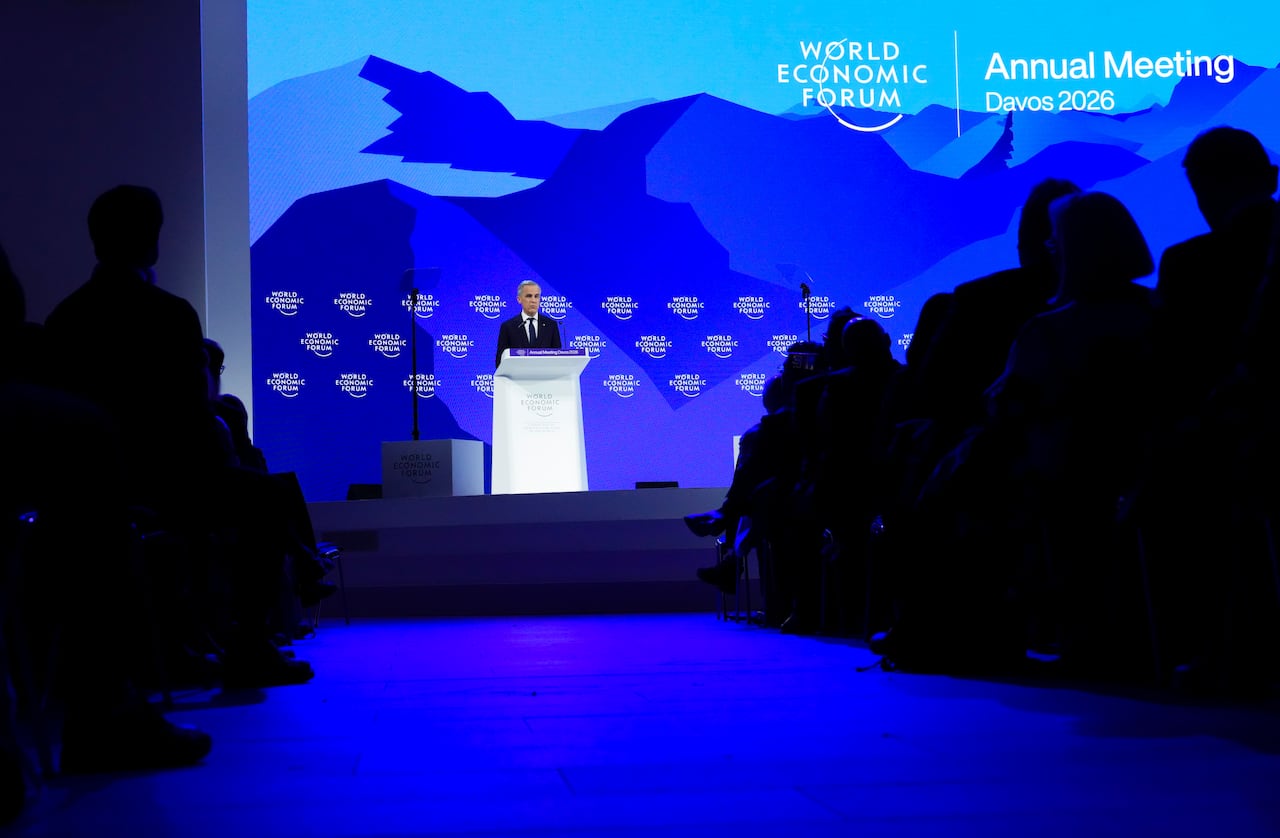
Carney’s Davos speech drew reactions globally. (Sean Kilpatrick/The Canadian Press)
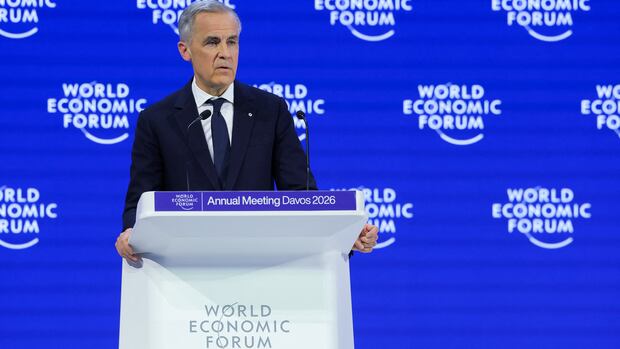
At that time, there was still a belief that the post-war framework merely needed to endure Trump’s presidency. Nearly eight years later, maintaining such optimism is more challenging. This week in Davos, Switzerland, Carney urged the world’s “middle powers” to “live” that “truth.”
“Stop using the term ‘rules-based international order’ as if it still operates effectively,” he stated. “Name it for what it is: a system marked by escalating great power competition where the most influential nations pursue their interests by weaponizing economic integration.”
- Cross Country Checkup is asking: What grade do you give Mark Carney for his handling of Donald Trump? Share your thoughts here and we may feature your response or contact you for Sunday’s show.
Carney’s address was eloquently structured, refreshingly candid, and striking in its terminology — signaling a significant shift in both Canadian foreign policy and the global landscape. However, the responses both domestically and internationally may reflect a widespread desire for someone in authority to articulate the unfolding situation more plainly.
At Issue this week: Prime Minister Mark Carney outlines a new era of global politics in his address to the World Economic Forum, but can he realize his vision? Additionally, Ontario Premier Doug Ford responds to the Canada-China EV agreement.
“Carney looked Canadians in the eye and said, ‘I understand your concerns. You’re not imagining things, and you’re not alone,'” Kyla Ronellenfitsch, a pollster involved with the Liberal campaign last year, wrote this week. “It’s reassurance through shared understanding.”
Trump’s somewhat menacing remarks the following day may have only reinforced Carney’s argument.
Recognizing a problem — and labeling it — is a crucial and vital initial step. However, it is clearly just the beginning.
Can the middle powers unite?
Carney’s appeal to the world’s middle powers — the non-hegemonic nations — echoed what Benjamin Franklin is often credited with advising the American colonies in the 18th century: they could either unite or face isolation.
This idea carries a clear rationale. As another adage suggests, there is strength in numbers. It remains uncertain how effectively and willingly the non-hegemonic nations can collaborate. But might Canada take a leading role in this endeavor?
Adam Chapnick, a defense studies professor at the Royal Military College of Canada, notes that “historically, our ability to unite groups of nations for collective action has largely depended on how much we are prepared to invest ourselves in the process.”
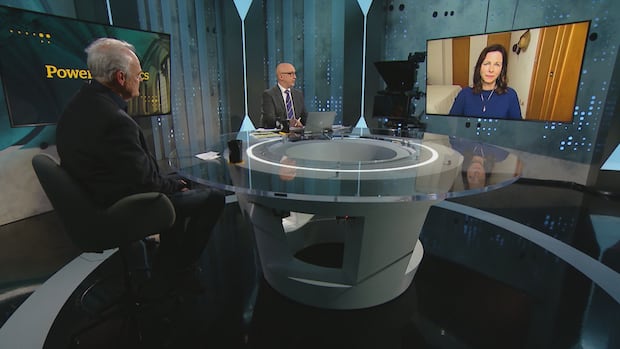
Sen. Peter Boehm tells Power & Politics that Prime Minister Mark Carney’s speech addressing world leaders in Davos, Switzerland, was the ‘most consequential’ by a Canadian prime minister in decades. Former Canadian diplomat Louise Blais states that it positions ‘Canada at the centre’ of global middle powers as they navigate a changing world.
“To date, Carney appears to be making commitments regarding military expenditure, and I expect he will be personally involved in various summits,” comments Asa McKercher, a foreign policy expert at St. Francis Xavier University. “However, [the Department of] Global Affairs is also facing budget reductions, which will affect day-to-day diplomacy with other middle powers.”
Words carry weight. Nonetheless, the inevitable evaluation of any speech — especially those expressing intentions or principles — involves comparing the rhetoric to subsequent actions. Following Davos, it was further questioned whether Carney’s remarks might signal a tougher stance towards the American administration.
Carney’s assertion that “countries earn the right to uphold principled positions by minimizing their vulnerability to retaliation” seemed to recognize that such vulnerabilities can hinder principled stands. While the global order may have shifted, the challenges posed by geography and economic interdependence are not easily altered.
In addition to redefining relations with the United States, there will be pressing challenges and crises to consider.
The issue of whether Canada should dispatch military forces to Greenland was seemingly settled by this week’s “agreement” — whatever it entails — between the U.S. and Denmark. Furthermore, the American president subsequently rendered irrelevant the question of whether Carney should participate in Trump’s “Board of Peace.”
However, new issues quickly arose that may require an official response — Trump’s remarks regarding NATO’s role in the Afghanistan conflict and a cabinet member of Trump commenting on a potential referendum in Alberta.
The NATO remarks prompted a response from the defense minister, while another minister dismissed the comments from U.S. Treasury Secretary Scott Bessent. However, it is likely that Canadian officials will face many more instances requiring their input.
Carney’s challenge at home
Carney’s address on Thursday, aimed more directly at the domestic audience, was less straightforward but perhaps significant in its own right. The prime minister seemed intent on defining the values that characterize Canada, grounding his government’s initiatives in those principles and possibly seeking to reassure those who have questioned Carney’s dedication to progressive ideals.
“Canada must stand as a beacon — an example for a world adrift,” Carney stated.
-
Mark Carney and ‘The Speech’
-
Global reactions to Carney’s Davos speech
-
Carney responds to Trump’s ‘Canada lives because of’ U.S. remarks at cabinet meeting
This is a commendable aspiration — something any prime minister from any political party might strive for. However, it emphasizes Carney’s domestic agenda and his capability to fulfill it.
No coincidence, this remains the central concern for Conservative Leader Pierre Poilievre.
“After almost a year with Prime Minister Carney, conditions have only worsened: the deficit has doubled, food inflation is twice that of the U.S., housing expenses are the highest in the G7, and no pipelines have been approved or anti-development legislation repealed,” Poilievre lamented on Thursday in what was presented as a response to Carney’s Davos address.
Discussions can be had regarding the causes and solutions to each of the issues raised by Poilievre. However, the overarching reality may be that the effectiveness of Canada’s response to this new global landscape will rely on the resilience of Canadian society.
The ongoing disruption in the world order will not simplify that challenge.