
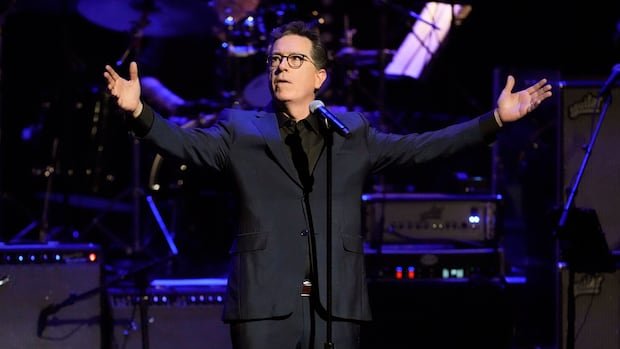
A clash has arisen between comedian Stephen Colbert and the network broadcasting his late-night program, shedding light on the equal time rule, a broadcasting regulation nearly a century old. During the latest episode of “The Late Show with Stephen Colbert,” Colbert mentioned that CBS attorneys informed him he could not air an interview with Texas Democratic Senate candidate James Talarico. Colbert humorously addressed the issue on the show after being instructed not to discuss the matter. CBS refuted Colbert’s claims, asserting that they had only provided legal guidance regarding the potential triggering of the FCC equal-time rule.
The equal time rule, a provision under the Communications Act of 1934, mandates that broadcasters offer equal airtime to all candidates participating in elections. This rule lies at the core of the disagreement between Colbert and CBS. The rule, outlined in Section 315(a) of the act, stipulates that if one candidate receives airtime on a program, all other candidates for the same position must be afforded equal opportunity. Exceptions to the rule include newscasts, genuine interview programs, live event coverage, and documentaries. The rule applies solely to broadcast television and radio, excluding streaming services and social media platforms.
Historically, political interviews on talk shows were considered exempt from the equal time rule as they served an informative purpose. However, a recent shift in interpretation by the FCC has indicated that talk shows may not automatically qualify for this exemption. The FCC issued new guidance, emphasizing that decisions regarding exemptions are made on a case-by-case basis. FCC Chairman Brendan Carr clarified that the rule applies to broadcast TV and radio but not necessarily to talk radio.
Colbert criticized Carr for what he perceived as partisan motivations behind the FCC’s actions, suggesting an attempt to stifle dissenting voices critical of President Trump. Despite Carr denying any censorship of Colbert’s show, an investigation was initiated by the FCC into other instances of potential violations of the equal time rule by TV programs such as “The View” and “Saturday Night Live.”
While the interview in question remains available on digital platforms like YouTube, concerns persist about the rule’s relevance given the shift in media consumption habits. Despite the rule’s limitations, experts like Harold Feld advocate for its preservation as a safeguard against media bias and exclusion of diverse perspectives. Feld warns that the recent FCC guidance may deter broadcasters from hosting political interviews, potentially depriving viewers of valuable information crucial for making informed voting decisions.