
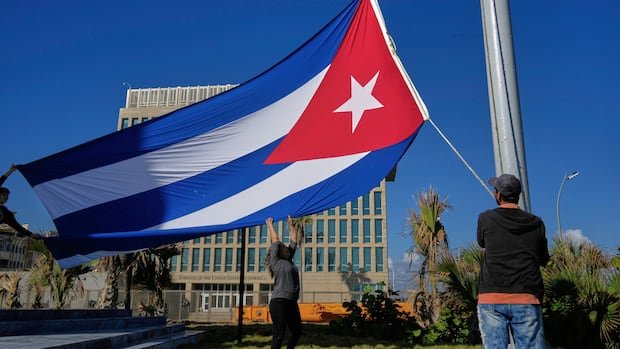
Cuban authorities solemnly lowered flags at daybreak to mourn the reported 32 security officers who lost their lives in a recent U.S. military operation in Venezuela, a country closely aligned with Cuba. The strong ties between the two nations have seen Cuban forces serving as bodyguards for Venezuelan President Nicolás Maduro, with Venezuela’s oil exports acting as a vital lifeline for Cuba’s struggling economy.
The U.S. administration has indicated that the removal of Maduro would be a strategic blow to the Cuban regime, emphasizing the interconnectedness of the two governments. The potential severing of ties between Cuba and Venezuela has raised concerns about the future of both nations, with Cuban officials calling for international condemnation of what they term “state terrorism.”
President Trump’s assertion that Cuba will face further economic challenges following Maduro’s potential ouster has sparked apprehension among Cubans, who already grapple with frequent power outages and food shortages. The prospect of a more uncertain future has left many residents deeply unsettled, with some expressing a willingness to defend their nation despite limitations due to age.
The significant influence exerted by Cuba over the larger, resource-rich Venezuela has long been a point of discussion, highlighting the complex dynamics between the two nations. As the situation unfolds, questions arise about the impact on Cuba’s energy supply, particularly in light of the uncertainty surrounding future oil shipments from Venezuela.
Experts point out that Cuba’s energy security hinges on external sources, with Russia emerging as a potential ally capable of filling the void left by reduced oil supplies. However, doubts linger about Russia’s willingness to step in, given the political considerations involved. The potential loss of Venezuelan oil could have far-reaching consequences for Cuba, necessitating strategic decisions to mitigate the impact.
Amidst these challenges, calls for Cuba to diversify its energy sources and engage with the private sector to attract foreign investments have gained traction. The need to navigate a changing geopolitical landscape underscores the importance of adapting to new realities and seeking alternative solutions to safeguard Cuba’s economic stability.