
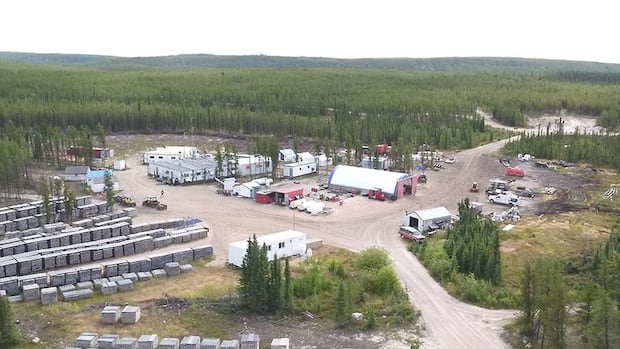
Denison Mines Corp. has greenlit the development of a proposed uranium mine in northern Saskatchewan after receiving approval from its board of directors, a construction license from the national nuclear regulator, and backing from nearby communities. Situated in Treaty 10 territory within the Athabasca Basin, the company’s Phoenix mine at Wheeler River could potentially become Canada’s first uranium mine in decades, with initial capital expenses now projected at $600 million.
The board of directors of Denison Mines officially endorsed moving forward with the preparation and construction of the Phoenix mine in March. The company, headquartered in Toronto, was granted a license by the Canadian Nuclear Safety Commission earlier this month to commence site preparation and construction of the mine and its accompanying mill. A separate license will be required for operational activities post-construction.
Expected to kick off production in 2028, Denison Mines CEO David Cates emphasized the scarcity of new large-scale uranium mines worldwide. With an estimated 56.7 million pounds of proven and probable uranium reserves, Denison intends to operate the mine for a decade. The provincial government granted project approval in August 2025.
The Phoenix mine could potentially pioneer the use of an in-situ recovery method, involving the injection of an acidic solution into the ore body to dissolve uranium for extraction back to the surface. Before the hearings last year, Denison Mines secured impact benefit agreements with English River First Nation, the Metis Nation—Saskatchewan, and Ya’thi Néné Lands and Resources, offering employment opportunities, training guarantees, contracts for local businesses, and financial benefits. While the details of these agreements remain confidential, they typically encompass various community-oriented benefits.
Ya’thi Néné Lands and Resources expressed satisfaction with the project after Denison addressed environmental concerns. However, some communities like Birch Narrows Dene Nation and Peter Ballantyne Cree Nation did not endorse the project during regulatory hearings. Denison Mines remains engaged in ongoing dialogue with these communities to enhance Indigenous engagement throughout the project’s lifecycle.
Denison Mines is set to become one of the few uranium producers in Saskatchewan alongside Cameco Corp. Another company, Vancouver-based NexGen Energy Ltd., is awaiting a construction license decision for its Rook I project in the Athabasca Basin. The last uranium mine approved in Saskatchewan was Cameco’s Cigar Lake mine, where construction commenced in 2005.