
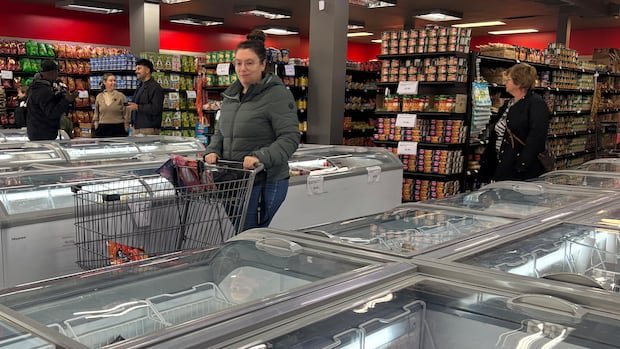
With the cost of living on the rise, Ron Robinson is committed to cutting expenses, especially when it comes to groceries. That’s why he shops at Liquidation Marie, a discount grocery chain in Montreal where prices can be up to 50% lower than traditional stores. Robinson remembers buying steaks for around six dollars each, a significant saving compared to big box stores where a pack of three can cost $20 to $25.
The trend of liquidation-style grocery stores is gaining traction nationwide as Canadians grapple with high food prices. Bianca Amor’s Liquidation Supercentre and The Grocery Outlet in Ontario are among the popular discount chains. Liquidation Marie, established in 2012, has rapidly expanded its locations, with plans to open 10 more in 2026, bringing the total to 18 in Quebec.
The key to Liquidation Marie’s competitive prices lies in buying surplus or mislabeled items from major retailers at discounted rates. Co-owner Marie Eve Breton explains that products like ketchup without barcodes or discontinued items are sold at rock-bottom prices. The store’s inventory changes daily, offering a variety of products at unbeatable prices.
Despite the variability, Liquidation Marie attracts an average of 30,000 customers weekly, with its Facebook group boasting over 139,000 members seeking bargains. The surge in these stores’ popularity is attributed to the challenging economic climate, with grocery prices rising over 27% in the last five years, according to Statistics Canada.
Experts suggest that the success of Liquidation Marie is also influenced by strategic location choices and the acceptance of buying close-to-expiry goods. Sylvain Charlebois from Dalhousie University highlights how major retailers benefit from liquidation stores by offloading damaged or surplus stock at discounted prices.
Liquidation grocery stores are changing consumer attitudes towards best-before dates, with more people recognizing that food past its prime can still be safe and affordable. This shift not only reduces food waste but also eases pressure on food systems to increase prices. The broader impact of these stores in curbing waste and promoting affordability is seen as a positive step towards a more sustainable food supply chain.