
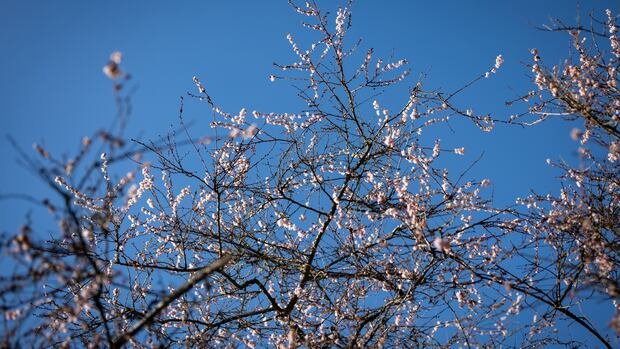
In North Vancouver a few weeks back, Larry Sewell, a local resident, was surprised to spot what seemed to be cherry blossoms blooming early on his street. Sewell was taken aback by the premature blossoms, noting that while he had seen blooms in February before, this early occurrence was unprecedented in his memory.
The mild winter in Metro Vancouver has led to the early blossoming of flowers in some neighborhoods, with January experiencing exceptionally warm temperatures. This unseasonable weather has given British Columbians the edge over Eastern Canada, which recently faced a severe winter storm.
Climate experts caution that an abrupt return to cold weather following early blooming could harm plant life. Andrew Weaver, a climate scientist and former B.C. Green Party leader, observed various flowers blooming ahead of schedule in Victoria, ranging from cherry blossoms to daffodils.
Meteorologist Derek Lee from Environment and Climate Change Canada highlighted that January temperatures have been about two degrees higher than the long-term average. The warm weather pattern, influenced by Pacific storms during this La Niña year, has sustained the higher temperatures in the region.
Barbara Hawkins, a biology professor at the University of Victoria, anticipates that plum, cherry, and apple blossoms may emerge earlier than usual due to the current warm spell, possibly exacerbated by global warming. The warming trend is a concern for potential crop damage if followed by a sudden cold snap, impacting plant growth.
Weaver emphasized the link between the warm January and global warming, highlighting the changing seasonal patterns worldwide due to climate change. He warned of the risks posed by premature plant growth, citing a previous instance where an early warm spell led to significant crop losses in British Columbia.
As the region braces for the possibility of a sudden cold snap, experts emphasize the need to protect plants from potential frost damage, especially if the warm weather triggers premature growth that could be vulnerable to freezing temperatures.