
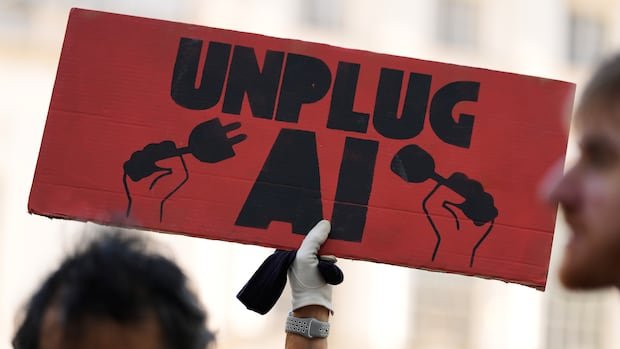
As worries grow regarding instances of AI agents behaving erratically, experts and stakeholders are increasingly advocating for government oversight of AI systems that are becoming more advanced. However, some experts express concerns about the challenges of achieving global cooperation and keeping pace with the rapid development of AI.
While certain individuals, such as U.S. President Donald Trump, believe that tech giants can self-regulate effectively, other industry leaders like Microsoft co-founder Bill Gates and Canadian-British AI pioneer Geoffrey Hinton argue that AI necessitates safeguards beyond self-regulation. Jaxson Khan, an expert in AI policy at the University of Toronto’s Munk School of Global Affairs, points out that most industries, such as food and aviation, are subject to government regulation, making it logical for AI to have similar oversight.
The rapid evolution of AI models poses a significant hurdle to regulation, as highlighted by Khan, citing a recent report indicating that AI capabilities double approximately every four months. The ability of some AI models to self-improve recursively further complicates regulatory efforts. Manon Paquet, associate director of policy at McGill’s Centre for Media, Technology, and Democracy, emphasizes the challenge for governments to keep up with the swiftly changing landscape of AI.
Calls for global oversight of AI have been made by experts like Prime Minister Mark Carney, who propose a non-industry body to oversee and mitigate international risks associated with the technology. A group of 400 scientists, including Hinton and AI pioneer Yoshua Bengio, advocate for an international body to establish containment standards and incident reporting for advanced AI systems. While achieving consensus on AI governance among countries may be complex, such an international body could facilitate collaboration to enhance system resilience and prevent potential AI misuse.
In Canada, there is currently no comprehensive federal regulation of AI. The proposed Bill C-34, the Safe Social Media Act, outlines criteria for AI chatbots to minimize the risk of generating harmful content. Carney has announced the formation of a national council on artificial intelligence to guide the government’s AI strategy and enhance safety measures. Despite challenges in federal legislation effectiveness due to the global presence of major AI companies, there are suggestions to enforce incident reporting requirements and hold companies accountable for harmful AI impacts in Canada.
Overall, the debate on AI regulation continues amid the evolving landscape of technology and the pressing need for balanced governance to ensure AI development aligns with societal values and safety standards.