
Wild fluctuations that swept through financial markets overnight subsided as Wall Street commenced trading on Monday. U.S. stocks are maintaining stability after gains in Europe and significant declines in Asia, with gold and silver prices bouncing back from earlier steep losses.
The focal point in financial markets once again was precious metals, where momentum abruptly paused following gold’s nearly doubled price over the past year.
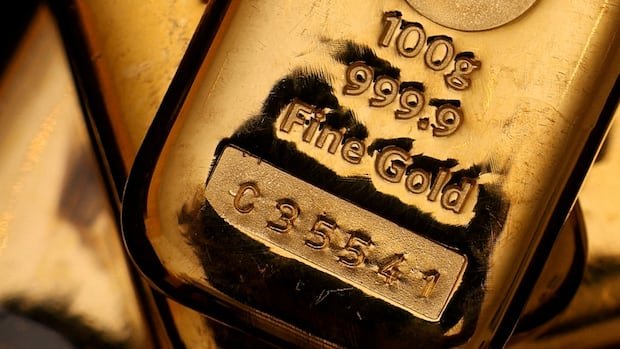
During the night, gold momentarily dipped below $4,500 US per ounce, marking a more than $1,000 drop from its recent peak just last week. However, it recovered much of that decline and settled at $4,725.00, representing a 0.5% decrease from Friday.
Silver’s price has been on a more tumultuous journey lately, swinging from a nine percent loss overnight to a three percent gain.
Gold and silver prices had been climbing as investors sought refuge in safer assets amidst various concerns, such as a potentially less independent Federal Reserve, an overpriced U.S. stock market, tariff threats, and extensive government debts worldwide.
On Friday, their prices tumbled, with silver experiencing a sharp 31.4% decline. Some analysts attributed this to President Donald Trump’s nomination of Kevin Warsh as the next Federal Reserve chair.
Warsh’s background as a former Fed governor led some investors to anticipate he might maintain high interest rates to combat inflation, potentially reducing the need for gold and silver as protective assets.
Nonetheless, many analysts on Wall Street are skeptical of this interpretation, suggesting that Trump’s expectation is likely for Warsh to lower interest rates, in line with the president’s demands.
The Federal Reserve chair holds significant sway over the global economy and markets by influencing the U.S. central bank’s interest rate decisions, impacting various investments as it aims to sustain a robust job market while curbing inflation.
The recent downturns in gold and silver prices are likely a result of traders unwinding positions after betting on continued metal price surges using borrowed funds, rather than a fundamental shift in demand for metals, according to Darrell Cronk, chief investment officer for Wealth & Investment Management at Wells Fargo.
At the start of the trading day, the S&P 500 edged down by 0.1%, heading for a fourth consecutive loss. The Dow Jones Industrial Average was up by 111 points, or 0.2%, as of 9:35 a.m. ET, while the Nasdaq composite declined by 0.3%.
Major technology stocks weighed on the market, with Nvidia posting a 2.2% decline, given its pivotal role in the advancement of artificial intelligence technology globally. Losses were more pronounced in Asia, where leading AI companies saw significant declines. South Korea’s Kospi index fell by 5.3% from its peak, marking its worst performance in almost 10 months following an almost nine percent drop in chip company SK Hynix’s shares.