
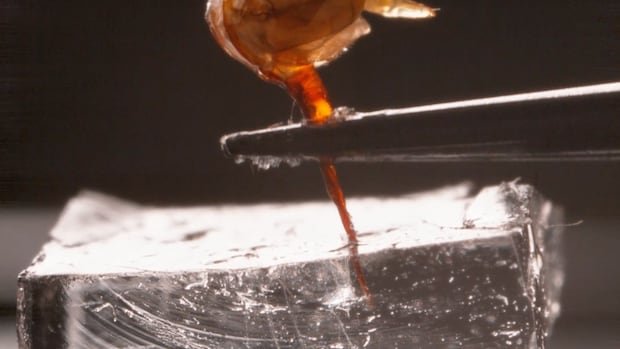
Researchers have discovered new insights into the defensive mechanism of a western honey bee (Apis mellifera) stinger, which is a last resort weapon that typically results in the bee’s death after delivering venom. The latest study, published in the Proceedings of the National Academy of Sciences, utilized high-speed cameras to capture the intricate details of how the stinger operates.
Lead author Fiorella Ramirez Esquivel, a postdoctoral researcher at Macquarie University in Australia, highlighted the significance of being able to film the stinger in action, made possible by modern camera technology. By filming at hundreds of frames per second, the research team could observe the dynamics of the stinger’s penetration process.
The experiments involved live honey bees, where the stinger was removed and promptly inserted into an artificial skin substitute due to its short active period once separated from the bee. The study focused on the unique design of the stinger, which features two specialized valves that work simultaneously to drive the stinger deeper into the flesh while continuously pumping venom from the sac.
The intricate dance of the valves, described as a “double piston design,” was recreated using 3D printing to better comprehend the venom delivery process. The study also highlighted the social nature of honey bees, with the stinging mechanism serving as a crucial defense for the larger colony.
Moreover, the study’s findings open up potential medical applications, as the continuous flow of venom facilitated by the dual valve system could have broader implications. The research prompts further questions about the stinging mechanisms in other bee species and their adaptation to various environments, offering new avenues for exploration in the field of entomology.