
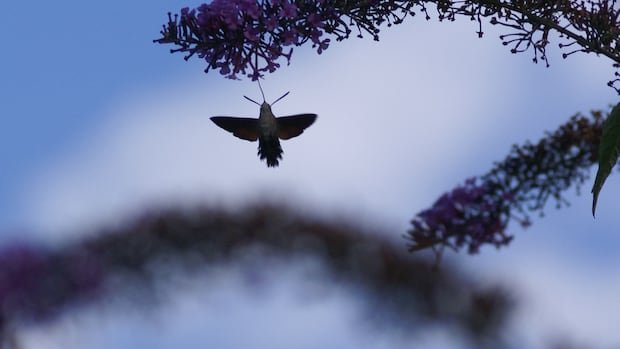
Many individuals have fond memories of summer evenings filled with moths and mayflies swarming around porch lights, or road trips marked by windshields covered in bug splatters. There is a growing sense that a shift has occurred.
Research indicates that these recollections are grounded in reality: insect populations are declining in Canada and globally, impacting birds, bats, fish, plants, and humans.
Hadil Elsayed, a doctoral student at York University in southern Ontario, conducted a study revealing that the overall insect mass collected at two protected sites had decreased by approximately half since the 1990s. Similarly, in the U.K., a citizen-science initiative tracking insect splatter on car license plates has observed a significant drop in flying insects. Numerous studies worldwide corroborate the decline of insect populations.
A substantial decline in tiny creatures
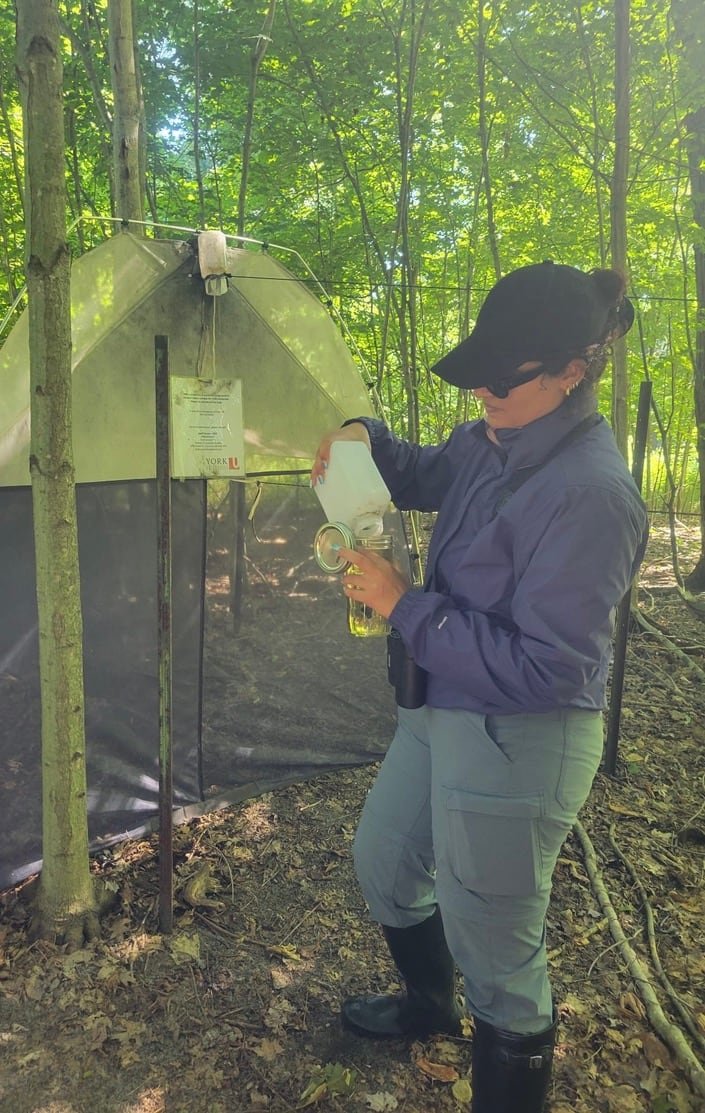
Between 2021 and 2023, Elsayed meticulously captured insects to assess populations at Long Point National Wildlife Area and St. Williams Conservation Reserve in southern Ontario, replicating a survey conducted by Environment Canada in the early 1990s.
Although Elsayed’s findings, part of her doctoral dissertation, are pending peer review, the data indicates a nearly 50% reduction in the total trapped insect mass over the past three decades, from 645 grams to 333 grams.
These results align with a recent study by researchers at the University of Michigan and Birds Canada, which reported a 62% decline in flying insects at the Long Point Bird Observatory from 1977 to 2011.
A significant portion of the insects Elsayed captured were tiny midges, weightless insects crucial as a food source for fish, birds, bats, and other insects.
The decline Elsayed observed equates to approximately 640 million midges.
“It’s an astounding number of insects,” Elsayed remarked, expressing her sadness at the findings. Flies, including midges and mosquitoes, experienced the most significant decline in both studies, with decreases also noted in butterflies and beetles.
“We’re not only witnessing the loss of rare species but also a decline in the numbers of common insect groups,” Elsayed emphasized.
The severity of the issue
Conservationist Andrew Whitehouse raised concerns that the decline of common species may pose a more significant threat than the extinction of rare ones since common insects play vital ecological roles, such as pollination and nutrient recycling.
White