
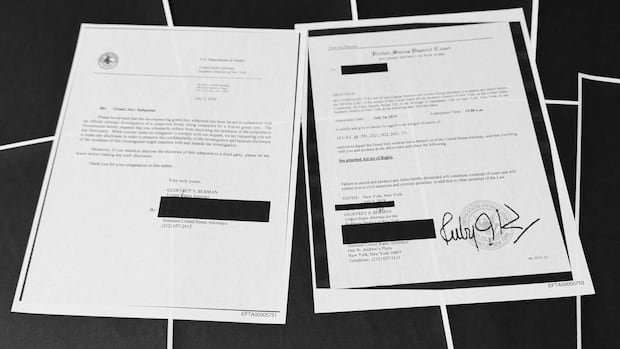
Since the release of Jeffrey Epstein files by the U.S. government last Friday, concerns have been raised by Democratic lawmakers, Epstein’s victims, and their legal representatives regarding the extensive redactions in the documents. Many parts of the files, including entire pages, have been blacked out. However, some internet users have found ways to uncover the redacted information. Social media commentators, such as Ed Krassenstein, have shared methods to reveal the concealed text, sparking discussions online.
Krassenstein shared his approach on X platform (previously known as Twitter), stating that he was able to unveil redacted content by simply highlighting, copying, and pasting the text into a different document. This method, although not effective on all redacted files, exploits a common “copy-paste” flaw found in certain PDF documents, according to Josh Quittner, CEO of Decrypt. Quittner explained that this flaw has been observed in previous high-profile cases, making information retrieval relatively straightforward.
Another un-redacting technique involves taking screenshots of redacted scanned images and using standard phone image-editing filters to enhance visibility. By adjusting exposure, brilliance, and contrast settings, users claim they can decipher the obscured text underneath the redactions. Despite these efforts, no new revelations linking Epstein to President Donald Trump have surfaced, as reported by The New York Times.
While un-redacted files shed light on Epstein’s abusive behavior and financial schemes, caution is advised when interpreting such information. There are concerns about the accuracy and authenticity of the unredacted content circulating online, as these claims have not been independently verified by credible sources. It is crucial to approach these revelations with skepticism and understand the limitations of the available information.
The importance of context and verification in analyzing the Epstein files has been emphasized by various sources. Politico’s “Five Rules for Reading the Epstein Files” underscore the need to critically assess the factual sources and biases when examining the documents. Without a comprehensive understanding of the case details, misinterpretations and dissemination of misleading information may occur.
As media outlets navigate the complexities of reporting on Epstein-related content, there is a reluctance to focus on potentially unreliable emails and claims. Journalists, like Miami Herald reporter Julie K. Brown, stress the need for skepticism when dealing with Epstein’s correspondence due to his history of dishonesty. Brown highlighted the media’s cautious approach towards unverified claims, emphasizing the importance of verifying information before presenting it as factual.