
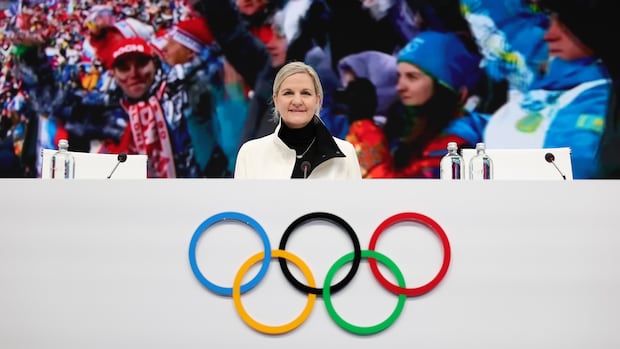
Change is on the horizon for the Olympic sports program, and it may prove to be challenging for some, warned IOC president Kirsty Coventry on Tuesday.
In her keynote address ahead of her first Olympic Games as the organization’s first female president in its 130-year history, Coventry outlined a central theme for her presidency.
Last June, Coventry initiated a review of over 450 medal events conducted by more than 40 sports federations for both the Summer and Winter Games.
“We must be candid about what is functioning and, perhaps more importantly, what is not,” she stated at the International Olympic Committee’s annual meeting, which precedes the Milan Cortina Olympics set to commence on Friday.
“This requires us to examine our sports, disciplines, and events with a fresh perspective, ensuring that we are adapting to the times,” Coventry added. “We will encounter tough decisions and discussions — this is a part of change.”
“I recognize that these conversations might be uncomfortable, but they are crucial for keeping the Games robust for future generations,” she emphasized.
The Summer Games has been pursuing younger audiences by incorporating urban sports such as skateboarding and 3-on-3 basketball over the last decade, with breakdancing making its debut in Paris 18 months ago.
“We must guarantee that the Games continue to inspire young people across the globe,” said the two-time Olympic swimming champion. “They should embody their values, authenticity, and quest for something real.”
Her comments about needing “a balance between tradition and innovation” could leave long-established sports like modern pentathlon advocating for their place in the 2028 Los Angeles Olympics.
“Indeed, Paris was a tremendous success, but that moment is now behind us,” she remarked. “It would be perilous to rest on our achievements.”
The findings from the Olympic program review, part of Coventry’s “Fit For The Future” initiative, are expected to be revealed later this year.
Emphasizing Sports Over Politics
Another focus of Coventry’s emerging leadership is a stronger emphasis on sports, with less engagement in political matters, despite her prior role as sports minister in Zimbabwe’s administration.
Her predecessor, Thomas Bach — who sat beside her on Tuesday — thrived on the political involvement associated with the position and closely connected the IOC with the United Nations and its agencies. Under Bach’s 12-year tenure, the IOC’s staffing and bureaucratic initiatives increased significantly.
Bach’s own keynote address prior to the Paris Summer Games defended the multilateral world order that was under scrutiny at that time and remains even more so now.
“We are fundamentally a sports organization,” Coventry reiterated on Tuesday, identifying sports as the IOC’s primary focus. “We recognize the political landscape and understand that we do not operate in isolation. However, our primary business is sport.”
Coventry’s inaugural meeting with U.S. President Donald Trump is highly anticipated in Olympic circles as the Los Angeles Summer Games draw nearer.
Commitment to Olympic Values of Diversity and Inclusion
Coventry has consistently vowed to uphold and champion “Olympic values,” which encompass diversity and inclusion.
“That diversity represents one of our most significant strengths,” she expressed to over 100 IOC members, commending the wide range of experiences they contribute to Olympic endeavors. “What an extraordinary assembly we are.”
Coventry acknowledged that the IOC “will persist in supporting” its initiatives related to health, inclusion, and education.
“That is what the world expects from us,” she stated. “When we act with empathy and determination, there is no challenge beyond our reach. This embodies the Olympic spirit that defines us.”